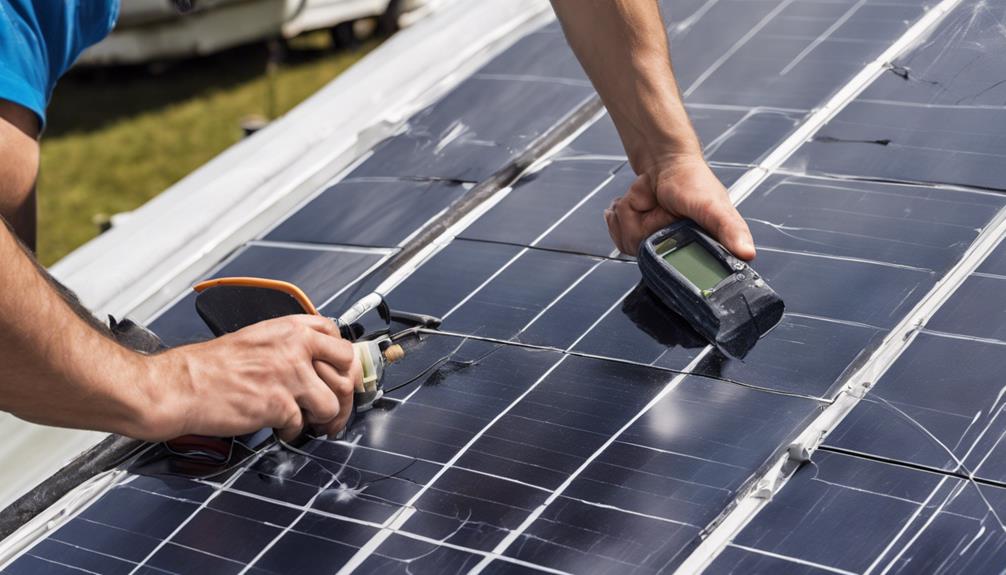
Short answer: Many homes can support rooftop solar — but check these six things first.
Rooftop solar (panels solares / photovoltaic or PV systems) is technically possible for millions of U.S. roofs: national studies show large rooftop technical potential across residential and commercial buildings. That said, suitability for your house depends on roof geometry, shading, condition, and local rules — not every roof is ideal, and an on‑site check or installer quote is the right next step (DOE/NREL rooftop potential).
Quick 6‑point checklist (do this in 5–10 minutes)
- Shading: Are trees or nearby buildings casting long shadows on your roof during morning or late afternoon? How to check: stand on the roof (safely) at solar noon or use a shading app or the mapping tools below.
- Usable roof area: Do you have large, relatively unobstructed roof planes? How to check: measure roof sections (or estimate from satellite view) and allow space for panels and access paths — installers typically need 100–300 sq ft per kW installed depending on layout.
- Orientation & tilt (azimuth & slope): South‑facing tilt of ~15°–40° is often best, but east/west and mixed arrays can work well. How to check: use roof imagery or a compass — installers will model energy loss from non‑ideal orientation.
- Roof age & condition: Will your roof need replacement within ~5 years? If so, replace it before installing panels. How to check: check the roof warranty and get a roofer’s estimate; many installers require a roof in good condition (DOE homeowner guidance).
- Structural capacity & penetrations: PV racks add a modest distributed load (panels commonly weigh ~40–55 lb each); some roofs need an engineer’s sign‑off. How to check: ask your installer for a roof‑load evaluation and, if required by your local building department, a licensed structural engineer’s stamp (NREL/Sandia guidance).
- Permitting, HOA rules & interconnection: Local codes, HOA covenants, and utility net‑metering rules affect feasibility and economics. How to check: contact your utility or check a state incentive database, and ask your HOA for current rules.
How to run a quick self‑check online
Start with address‑level mapping tools that estimate production and roof potential:
- PVWatts (NREL) — quick production estimate once you enter system size and location: pvwatts.nrel.gov.
- EnergySage or Sun Number — consumer‑facing site comparisons and typical output estimates: EnergySage explanation and Sun Number tools.
- Local incentives and rules — check DSIRE or your state energy office for rebates, tax credits and net‑metering policies.
Interpretation tip: tool estimates assume ideal or modeled shading/orientation. Use them to narrow options, not as a final quote — ask installers for a modeled proposal using your roof geometry.
When to call a pro
- Planned roof replacement within ~5 years — coordinate timing to avoid re‑installing panels.
- Complex shading (trees, chimneys) or multi‑roof designs — installers use site tools (thermal imaging, shade analyzers) to design around problems.
- Structural concerns or historic buildings — get a licensed structural engineer review if the installer recommends it.
If rooftop isn’t right: practical alternatives
- Ground‑mounted PV systems or carport canopies if land is available.
- Building‑integrated PV (BIPV) or solar awnings for limited roof area.
- Community solar subscriptions — a good choice if rooftop or permitting blocks a system.
- Add batteries later to improve self‑consumption and resilience regardless of system location.
Short FAQ
How much do panels weigh?
Typical framed residential panels weigh about 40–55 lb (18–25 kg) each; the distributed dead load is modest but installers perform structural checks and local permitting may require an engineer’s stamp (NREL/Sandia).
Do I need to replace my roof first?
If you expect to replace your roof within ~5 years, it’s usually best to do the roof work before installing PV — removing and reinstalling panels raises cost and complexity (DOE).
Can my HOA or utility block solar?
Rules vary by state. Many states limit HOA restrictions and most utilities have interconnection requirements; check your utility and local policies. Also review national adoption/context data to set expectations (EIA/market context).
Next steps (call to action)
Try PVWatts for a quick production estimate, run a comparison on EnergySage, and check local incentives (DSIRE or your state energy office). If the numbers look promising, request at least three local installer quotes that include a roof inspection and a modeled production estimate. Even if your roof isn’t ideal, community solar or ground‑mounted options can still deliver benefits. For more background on rooftop potential and official guidance, see DOE/NREL resources on rooftop solar (DOE Homeowner’s Guide, DOE/NREL rooftop potential).
Need help next? If you’d like, I can draft two headline options and a short meta description, or outline the checklist as a printable infographic.