Introduction
A solar (PV) inverter converts the direct-current (DC) electricity produced by rooftop solar panels into the alternating-current (AC) electricity used by household appliances and the utility grid. Beyond conversion, inverters manage maximum power point tracking (MPPT), provide safety and grid-interconnection functions, and often include monitoring and communications. Choosing the right inverter depends on roof geometry, shading, system size, storage and backup goals, and budget.
What a solar inverter does
At its core an inverter:
- Converts DC from PV modules into AC for home use or export to the grid.
- Implements MPPT (maximum power point tracking) to extract available power from panels.
- Provides safety features such as anti-islanding protection (stops energizing the grid during outages) and may support rapid shutdown for emergency responders.
- Includes monitoring, communications, and sometimes reactive-power or grid-support functions required by modern interconnection standards (see IEEE 1547 and UL listings).
Because the inverter is the interface between PV, batteries (if any), loads, and the utility, its capabilities strongly influence system behavior during outages, performance under shade, and long-term service needs (U.S. Department of Energy; NREL).
Main residential inverter configurations
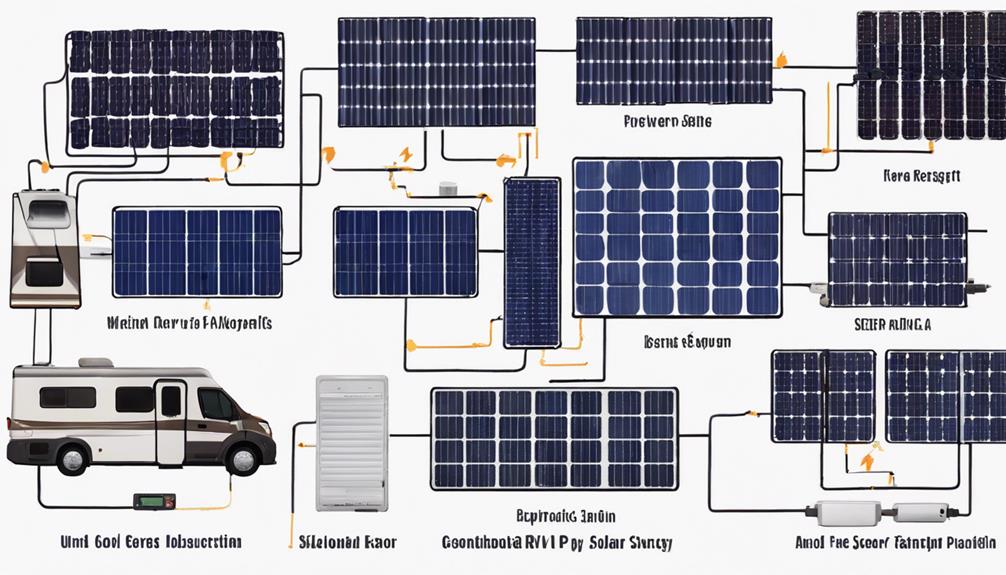
| Architecture | Where conversion occurs | Best fit | Main advantages | Main tradeoffs |
|---|---|---|---|---|
| String inverter | Centralized, wall-mounted | Simple roofs, uniform orientation, cost-sensitive projects | Lower equipment/installation cost; easier service access | String-level effects from shading or mismatch; module-level monitoring needs add-ons |
| String + power optimizers | Module-level DC conditioning; DC-to-AC at central inverter | Roofs with some shading or mismatch wanting module-level optimization | Improves module output under mismatch; module monitoring available | Still reliant on central inverter; more rooftop electronics |
| Microinverter | Module-level DC-to-AC | Multiple roof orientations, partial shade, desire for per-module monitoring | Module-level conversion limits string interactions; flexible design | Higher rooftop component count; higher upfront cost; roof access for service |
| Hybrid / multimode inverter | Central inverter managing PV and battery power flows | Solar-plus-storage seeking integrated control and backup | Coordinates PV and battery, can provide backup if system is designed for it | Backup capability depends on battery, transfer equipment, and whether inverter is grid-forming |
| Central inverter | Large centralized conversion (commercial) | Large residential clusters / commercial installations | Scales well for large arrays | Not typical for single-family homes |
String inverters vs. microinverters vs. power optimizers
Which architecture is right depends on site characteristics:
- Shade and roof complexity: Microinverters or optimizers reduce the impact of shaded or differently oriented panels by operating (or conditioning) at the module level. String inverters work best when panels share the same orientation and shading is minimal or predictable.
- Monitoring: Microinverters and optimizer systems commonly include module-level monitoring. String inverters provide string- or system-level monitoring unless you add MLPE (module-level power electronics).
- Maintenance access and cost: Wall-mounted string and hybrid inverters are easier to service. Microinverters and rooftop optimizers increase rooftop electronics and can raise labor costs for replacement or repairs.
- Expansion: Some microinverter and optimizer systems offer easier incremental expansion, but expansion still depends on electrical capacity, compatibility, and code/utility approval.
What is a hybrid inverter?
A hybrid (multimode) inverter coordinates PV generation and battery charging/discharging. It can route PV to loads, charge batteries, export/import from the grid, and — when specifically designed and paired with appropriate batteries and transfer equipment — provide backup during outages. Many hybrid inverters are grid-following and will not create a stable islanded AC signal unless they include grid-forming controls. That distinction matters for backup: grid-forming inverters can establish voltage and frequency for an intentionally islanded load if the system is designed and permitted for that operation (DOE; NREL).
Key inverter specifications to compare
- AC output rating: Maximum continuous AC power the inverter can supply.
- Maximum DC input voltage and MPPT range: Ensures the array operates inside the inverter’s tracking window; affects string sizing.
- MPPT channels / trackers: Multiple trackers help when array sections have different orientations.
- Peak vs. weighted (CEC) efficiency: Weighted efficiency better reflects annual performance than peak efficiency alone.
- DC-to-AC ratio and clipping: Oversizing the array can be economical; some clipping at high sun is an expected tradeoff and not a defect.
- Temperature derating & operating range: High temps reduce output; check rated performance in your climate.
- Nighttime/standby consumption and surge capability: Important for storage and backup planning.
- Enclosure rating and communications: Weather rating (NEMA/IP) and monitoring options affect installation and diagnostics.
- Warranty and service: Look at coverage details, transferability, and who performs repairs.
Safety, certifications, and utility approval
Ensure equipment meets applicable standards (UL listings, IEEE 1547 interconnection requirements) and that the inverter’s anti-islanding and rapid-shutdown features comply with local code and utility rules. Utilities often require specific settings, communications, or approvals; a qualified installer should handle interconnection paperwork and code compliance.
Transformer vs. transformerless: a brief note
Transformerless inverters omit a line-frequency transformer and are typically lighter and more efficient, but that design choice affects grounding and fault-detection methods. Treat transformerless versus transformer-equipped as one technical factor among many; prioritize overall compatibility, certification, and installer guidance rather than assuming one type is universally superior.
Questions to ask a solar installer
- Why is this inverter architecture appropriate for my roof and shading?
- What are the inverter’s MPPT voltage/current limits and number of trackers?
- What DC-to-AC ratio will you design, and how much clipping do you expect?
- Is the inverter grid-following or grid-forming, and how does that affect backup capability?
- Which loads (if any) will be backed up during an outage and how is isolation achieved?
- Who handles warranty service, and what is the expected service process if the inverter fails?
- Is the exact model approved by my utility and local authority having jurisdiction?
Conclusion and next steps
Pick an inverter as part of the whole-system design: match architecture to roof complexity, shade, expansion plans, and storage/backup goals. Compare relevant specifications, warranties, and installer support rather than relying on peak-efficiency figures or marketing labels. Use a qualified local installer to verify code and utility requirements, to model production (including clipping and temperature effects), and to size equipment safely.
Disclaimer: Exact equipment selection and installation must account for local code, utility interconnection rules, site conditions, and a qualified installer’s design. Refer to U.S. Department of Energy guidance, NREL technical documentation, and IEEE/UL standards for detailed technical and safety references.