Executive summary
Residential solar panels can be a long‑term investment in lower electric bills, resilience, and reduced carbon emissions. As of July 4, 2026 the IRS states the federal Residential Clean Energy Credit (Section 25D) applied to qualifying systems placed in service through Dec. 31, 2025 — check IRS guidance before claiming a credit (IRS). Typical U.S. pricing benchmarks (Q4 2025) were about $3.39 per watt‑DC, so a 6–8 kW rooftop system cost roughly $20,000–$27,000 before incentives (SEIA). Many homeowners reach break‑even in roughly 10 years, though local conditions vary (EnergySage).
Why homeowners choose solar today
Homeowners go solar for three main reasons: lower long‑run energy costs, protection from rising retail electricity rates, and environmental benefits. Financially, a median EnergySage shopper hits payback in about 10 years depending on state electricity prices, system size, and incentives (EnergySage). Environmentally, operating PV systems produce no on‑site combustion emissions, though lifecycle impacts (manufacturing, transport, end‑of‑life) are part of the full picture (DOE/EPA guidance).
How residential solar works (quick primer)
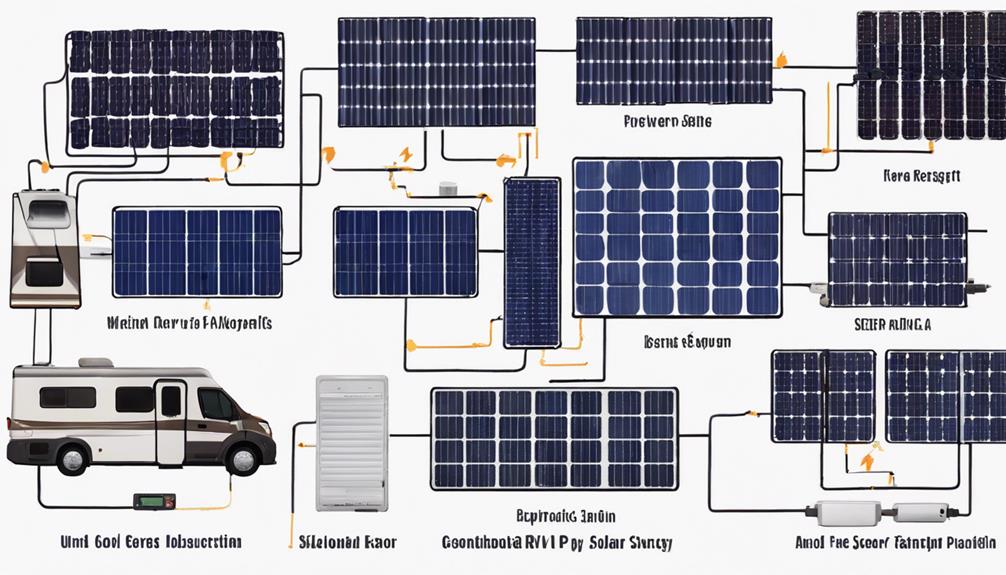
Solar panels convert sunlight to DC electricity measured in Wdc or kWdc. An inverter converts DC to AC for use in your home and to export to the grid. Systems are sized in kW (nameplate) and production is measured in kWh. Batteries are optional: they store excess generation for use during outages or evenings but add cost and maintenance considerations.
Costs, incentives and a simple example
Benchmark pricing: Q4 2025 U.S. average residential installed price was about $3.39/Wdc (SEIA). Example math (pre‑incentive):
- 6 kW system at $3.39/Wdc ≈ $20,340
- 8 kW system at $3.39/Wdc ≈ $27,120
Applying incentives (where eligible) lowers your net cost. Typical payback across many U.S. homeowners is near 10 years, but that estimate depends heavily on your local retail electric rate, solar production, and available incentives (EnergySage). Financing options include cash purchase, solar loans, home equity, PACE, or third‑party ownership (PPA/lease) — each changes cost, incentives, and resale considerations.
Important: the federal Residential Clean Energy Credit status changed — as of July 4, 2026 the IRS confirms the 30% credit applied to property placed in service through Dec. 31, 2025; check the IRS page for current rules and consult a tax professional before assuming eligibility (IRS).
Incentives & net‑metering: what to check locally
State and utility programs vary. Net‑metering or net‑billing rules determine how your utility credits exported energy and can dramatically affect payback. Use DSIRE and your state public utility commission (PUC) to confirm rules and local rebates (DSIRE). Do not assume your meter will always “spin back” or that exports will be credited at full retail value — many jurisdictions have updated compensation rules.
Technology choices that matter
Panel efficiency affects how much roof area you need. Modern residential modules commonly exceed 20% efficiency; leading mass‑market modules in 2025–2026 often fall in the low‑ to mid‑20s percent range, and advanced types (TOPCon, HJT, back‑contact) push higher (NREL). Inverters come as string inverters, microinverters, or systems with power optimizers; batteries add complexity and lifecycle considerations. Higher efficiency modules reduce roof area but typically come at higher cost — weigh roof constraints and production needs.
Practical first steps
- Collect 12 months of electric bills to understand kWh usage.
- Check roof age, condition and orientation; plan roof work before installation if needed.
- Request detailed quotes from at least three licensed installers, and ask for system production models (PVWatts or PVSyst outputs).
- Confirm warranties (module, inverter, workmanship) and expected degradation rates.
- Verify incentives and interconnection/net‑metering rules with DSIRE and your utility.
Risks, maintenance & end‑of‑life
Roof replacement timing, inverter replacement (often 10–15 years), panel degradation, and evolving recycling rules are real considerations. Panels degrade slowly, but plan for inverter replacement and roof work. Recycling infrastructure is improving; check EPA/DOE guidance for responsible end‑of‑life management (EPA/DOE).
Short FAQ
Will solar increase my home value? Studies generally show positive effects, but value depends on local markets and ownership model.
Do I need a new roof? If your roof will need replacement within a few years, replace it first to avoid uninstall/reinstall costs.
Can I go off‑grid? Technically yes with enough panels and batteries, but it is costly and requires careful design; most homeowners remain grid‑connected.
Next steps & disclaimer
Ready to move forward? Get 3 quotes, download a homeowner checklist, and verify incentives with DSIRE and the IRS. This article is informational and not tax or legal advice — consult a tax professional or licensed installer for your specific situation.
Geo‑note: State: [insert state] — local incentives and net‑metering rules vary. Check DSIRE (programs.dsireusa.org) and your state PUC for details.
Sources: IRS (Residential Clean Energy Credit, updated July 4, 2026), SEIA (Solar Market Insight Q4 2025), EnergySage (payback guidance), NREL (PV research), DSIRE (state incentives), EPA/DOE (lifecycle and recycling guidance).