What you’ll learn
Quick, friendly steps explaining how sunlight turns into usable electricity (photovoltaics), how batteries or the grid store and share that energy, and simple ways to estimate how long your lights, pump, or home can run.
What is the Sun giving us?
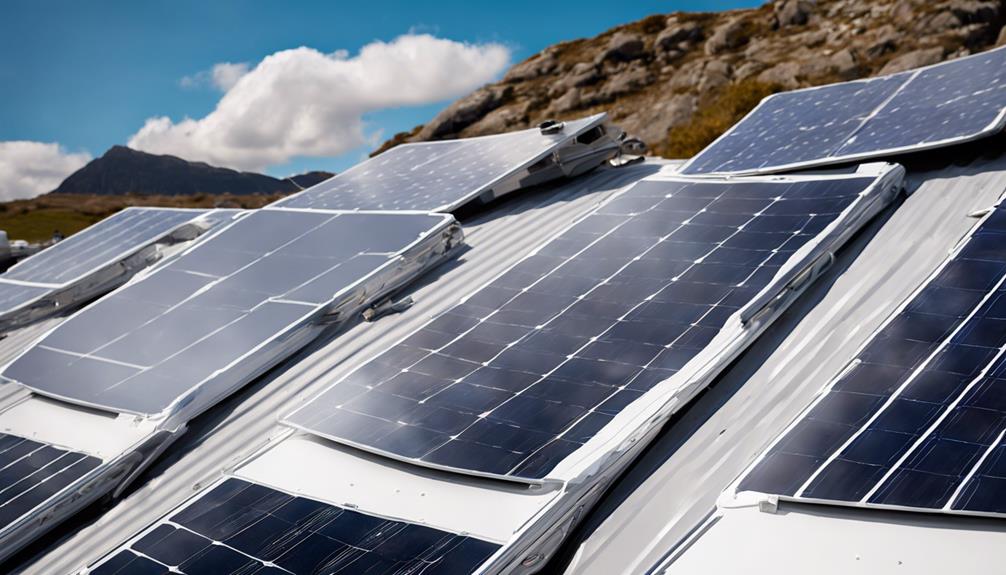
Sunlight is energy made of tiny packets (photons). When photons hit a solar photovoltaic (PV) cell—a semiconductor device—they free electrons and create direct current (DC) electricity. An inverter converts DC to alternating current (AC) for most home appliances. Panels make power in both direct and diffuse light, so they still produce on cloudy days (less output, not zero).
Step 1 — How a solar panel system works (plain terms)
- Cell / Module: Many PV cells wired together make a module (panel).
- Rated power (W or Wp at STC): A panel’s label shows its peak output under Standard Test Conditions (STC). Real output varies by sun, angle, shading, and temperature.
- Inverter: Changes DC from panels to AC for home use (or keeps DC for some appliances/storage).
- Controller / MPPT: Optimizes charging for batteries and maximizes panel output.
For more detail on the basics, see the U.S. Department of Energy’s overview: How does solar work.
Step 2 — From watts to kilowatt‑hours: a simple energy math
Power (watts, W) is how much electricity something uses at an instant. Energy (kilowatt‑hours, kWh) is how much it uses over time.
Quick panel energy estimate:
energy per day ≈ (panel W × average sun hours per day × system derate) ÷ 1000 = kWh/day
Example: a 300 W panel in a place averaging 4.5 sun‑hours/day, derate 0.8 (losses) →
0.3 kW × 4.5 h × 0.8 = 1.08 kWh/day
That 1.08 kWh could run a 60 W bulb for ~18 hours (1.08 kWh ÷ 0.06 kW = 18 h), ignoring storage losses.
For modeled estimates for your address use tools like NREL PVWatts: pvwatts.nrel.gov.
Step 3 — Storage and runtime: batteries made simple
Battery capacity is given in kWh. Usable energy depends on depth of discharge (DoD) and round‑trip efficiency.
Basic runtime formula:
hours ≈ (battery usable energy in kWh) ÷ (load in kW)
Adjust for losses: usable ≈ nameplate kWh × DoD × round‑trip efficiency.
Worked examples
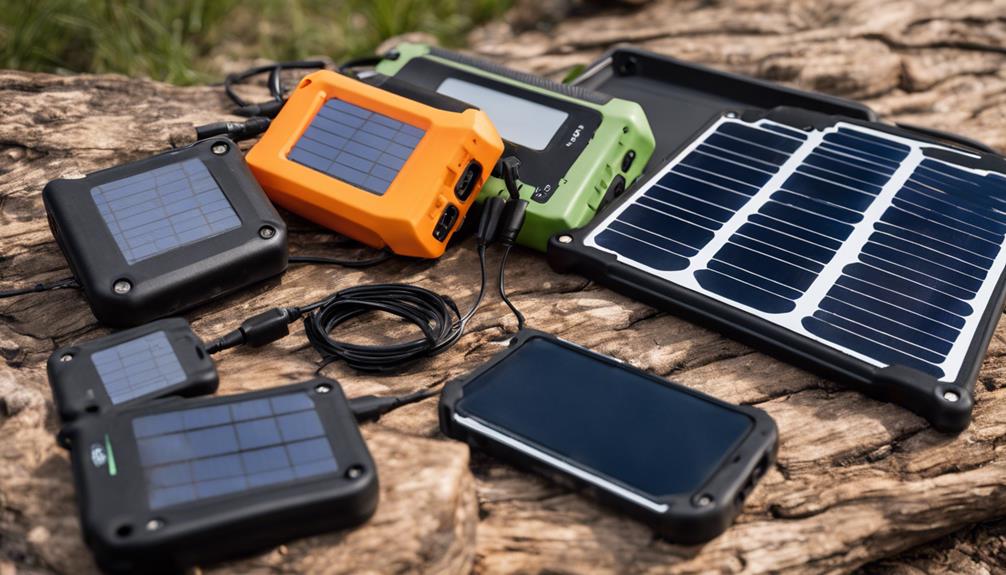
- Garden LED light: If the light’s battery is 1,000 mAh at 3.7 V (≈3.7 Wh) and the LED draws 10 mA at 3 V (≈0.03 W), then runtime ≈ 3.7 Wh ÷ 0.03 W ≈ 123 hours. Real life is lower because of controller losses and dimming—check the product mAh/Wh spec.
- Small DC pump: A 100 W pump running from a 1 kWh battery (usable ≈0.9 kWh) lasts ≈0.9 kWh ÷ 0.1 kW = 9 hours (account for inverter losses if using AC).
- Whole‑home backup: Typical U.S. home uses ~20–30 kWh/day. A 13.5 kWh battery (common home size) might supply a portion of one day’s needs—13.5 kWh ÷ 25 kWh/day ≈ 0.54 days—so it’s useful for keeping essentials on, not full multi‑day off‑grid without added solar and conservation.
For battery modeling and efficiencies see NREL’s storage resources: SAM / battery storage.
Step 4 — Grid‑tied vs off‑grid and net metering
Most homes connect panels to the grid. The grid can act like cheap “storage”: you export excess generation and import when you need it. Net‑metering rules and credits vary by state and utility—check your local utility or state energy office. If you want full backup during outages, you need batteries and a transfer/backup system.
Read about policy differences (net metering varies widely): net metering overview.
Step 5 — Choosing components & safety tips
- Panel types: most homes use crystalline silicon modules. Higher efficiency costs more.
- Batteries: lithium‑ion (including LiFePO4) is common now; lead‑acid and flow batteries exist for special cases. Compare kWh, DoD, warranty, and cycle life.
- Inverters: string, microinverter, or hybrid inverter (for battery integration).
- Safety: install by a certified electrician/installer, follow battery manufacturer guidance, and avoid old NiCd due to toxicity.
- Maintenance: keep panels reasonably clean, trim shading trees, and plan for battery replacement before end of life.
Step 6 — Two safe experiments for kids (with adult supervision)
- Light an LED with a small solar cell: place a single small cell in sun and touch its leads to an LED. Observe how brightness changes with light.
- Measure panel voltage with a multimeter: take the open‑circuit voltage of a small panel in sun vs shade to see the difference. Always supervise and avoid wiring panels together carelessly.
Glossary (quick)
- PV cell/module: device that converts sunlight to DC electricity.
- Inverter: converts DC to AC.
- kW / kWh: kilowatt = power; kilowatt‑hour = energy over time.
- DoD: depth of discharge — how much battery energy you can use without harm.
Where to learn more
Official resources: U.S. Department of Energy (solar basics), NREL PVWatts for local estimates (pvwatts.nrel.gov), and NREL battery/storage pages. For typical battery sizing examples see manufacturer pages (example: Tesla Powerwall) and check your utility for net‑metering rules.
Last reviewed: 2026‑07‑02. Check local policies, incentives, and product warranties—these change over time.