Used, refurbished, and recycled PV modules are distinct end-of-life pathways. A second-life PV module can still produce useful electricity, but age, damage history, testing, and system compatibility determine whether reuse makes sense. This article explains why working panels are removed, how much performance they may retain, what to inspect before buying, and when reuse is preferable to recycling.
Why working PV modules get removed
Modules are often taken out of service for reasons other than total failure:
- Repowering: owners replace modules with higher-efficiency units while the old modules remain functional.
- Site redevelopment, lease expiration, or changes in land use.
- Partial-system damage (for example, inverter or BOS failure) where only some components are replaced.
- Maintenance cost, supply-chain issues for replacement parts, or project ownership changes.
- Local code or rapid-shutdown upgrades that lead to system rework.
How much performance can an older module retain?
PV modules degrade gradually; the rate depends on technology, climate, installation conditions, and any damage. Recent reviews place typical crystalline-silicon degradation around 0.5%–0.6% per year on median datasets, but individual modules can vary.
Illustration: a 400-watt nameplate module losing 0.5% per year would produce roughly 380 watts after ten years (400 × (1 − 0.005)¹⁰ ≈ 380 W). This is an example, not a guarantee—measured I‑V or MPP output is the reliable metric.
What to check before buying a used PV module
Testing and documentation are central. Ask the seller for these items and inspect modules closely:
- Manufacturer, model, serial numbers, and production year.
- Original nameplate rating and electrical specifications.
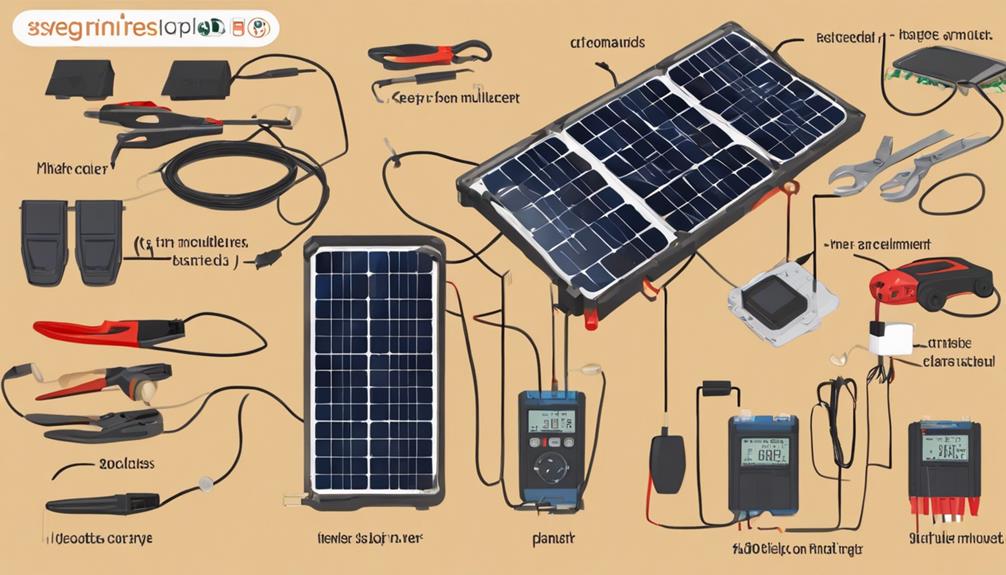
- I‑V curve or MPP test results showing measured current, voltage, and power.
- Electroluminescence (EL) or infrared imaging, when available, to reveal cell cracks and hotspots.
- Visual inspection notes: cracked glass, delamination, browning, burn marks, corroded frames, damaged junction boxes, or compromised backsheets.
- Evidence of moisture intrusion, hail, fire, or transport damage.
- Quantity and lot consistency—matching modules simplify system design and maximize performance.
- Remaining transferable warranty, return policy, and any formal recertification documentation.
- Shipping and storage history—wet or rough storage can accelerate failures.
Are used modules suitable for a home rooftop?
They can be, but rooftop and grid-tied reuse usually require more scrutiny than off-grid applications. Permitting, interconnection rules, rapid-shutdown requirements, and local electrical and fire codes may mandate certified/listed equipment and professional installation. A licensed solar professional should verify that the modules are compatible with the inverter, optimizers, racking, and other BOS components.
Factors that can make new modules preferable for rooftops include limited roof area (newer modules often have higher power density), intact warranties, and simplified permitting.
Where second-life modules make the most sense
Used modules are often well suited to lower-stakes or space-plentiful applications where code and interconnection are less restrictive or can be managed:
- Off-grid cabins, remote monitoring stations, and agricultural or water-pumping systems.
- Workshops, sheds, demonstration arrays, and educational projects.
- EV or e-bike charging and auxiliary or backup loads.
- Ground-mounted arrays where additional area offsets lower module efficiency.
Off-grid projects still require proper electrical design and safe installation; “off-grid” is not a license to skip standards.
Reuse versus recycling
Reuse and refurbishment extend module life and keep panels out of landfills when feasible. If a module is unsafe, badly damaged, or uneconomical to repair, recycling recovers valuable materials—glass, aluminum, and some semiconductor and metal content—but recycling processes do not restore a module to new condition. The preferred EOL management hierarchy is: keep systems operating when practical, repair/refurbish, reuse, then recycle.
Bottom line
Second-life PV modules can be a cost-effective and environmentally beneficial option when they are independently tested, compatible with the rest of the system, and priced to account for remaining life and lower output. New modules will generally be the better choice where roof space, peak power density, full warranties, streamlined permitting, and long-term performance guarantees are priorities. Always require I‑V/MPP testing, visual and EL/thermal inspection when possible, and involve qualified professionals for grid-connected or rooftop installations.
Quick FAQ
- Do used panels still work? Often yes—many are removed for reasons other than total failure.
- How long can they last? Typical module lifetimes are commonly in the 20–35 year range, but remaining life varies by age, condition, and technology.
- Are they safe? Safe reuse depends on condition, testing, and compliance with local codes—use a licensed installer for grid-tied systems.
- Should I trust a low price? A low purchase price can be offset by testing, repairs, shipping, BOS incompatibilities, permitting, and lost performance—evaluate total system cost, not just module cost.