Standfirst: Solar-electric boats combine photovoltaic arrays, battery storage and electric propulsion to reduce fuel use and noise on short routes and recreational craft. This article explains how they work, realistic performance expectations, key design tradeoffs, and what owners and operators should ask before buying or retrofitting.
TL;DR
- “Solar-electric” usually means onboard PV + batteries powering electric motors; PV often supplements batteries rather than replacing shore charging entirely.
- Practical PV yields are limited by deck area and local sunlight—expect a few kWh per day per several square metres of panels (typical coastal insolation ~3.5–6 kWh/m²/day).
- Batteries matter: falling pack prices (~$115/kWh reported by BloombergNEF in 2024) make electrification more viable, but chemistry and marine safety remain vital design choices (LFP vs NMC tradeoffs).
- Use cases where solar adds value: dayboats/auxiliary power, short-route ferries with shore charging, research or workboats that need quiet/hassle-free power and low operating emissions.
How solar-powered boats work
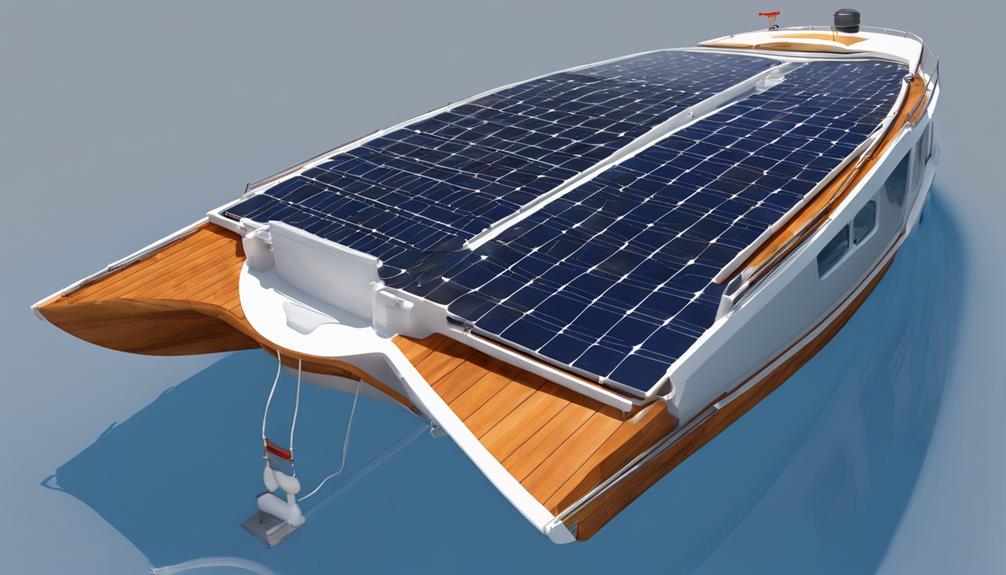
At a system level the architecture is straightforward: PV array on deck/roof → MPPT charge controller → battery bank with BMS → inverter/drive electronics → electric motor(s). Controls prioritize battery state of charge, propulsion demand and PV input; some installations also allow shore charging or a backup generator (hybrid-electric).
Common use cases and scale
- Small recreational craft: PV commonly powers hotel loads and can support low-speed cruising or electric tenders. Panels reduce generator runtime and extend autonomous operation.
- Commuter / short-route ferries: Several demonstration projects show transit-scale electrification is practical when routes are short and turnaround charging is available (for example, the ADITYA ferry project launched in 2016–2017 illustrates transit‑scale solar‑electric use).
- Yachts and hybrids: PV reduces hotel loads and can top up batteries; many cruisers adopt PV for quieter anchoring and lower fuel use rather than full reliance on PV for long passages.
- Demonstrations / records: Specialized vessels like the Tûranor PlanetSolar (completed a circumnavigation in 2010–2012) demonstrate technical feasibility at scale but relied on very large PV areas and specialized design.
Technical considerations and design checklist
- PV area and yield: Deck/roof area is the primary constraint. Commercial cells today reach roughly 22–25% efficiency; available daily energy ≈ area × insolation × efficiency. Use site-specific irradiance (PVWatts/NSRDB recommended).
- Sizing batteries: Define mission profile (speed, distance, hotel loads) and size battery for required range plus reserve. LFP (LiFePO4) is popular for marine use for safety and cycle life; NMC gives higher energy density when weight/volume are limiting.
- Power electronics: MPPT for PV, a robust marine BMS, inverter/drives matched to the motor(s), and shore fast-charging capability where operationally needed.
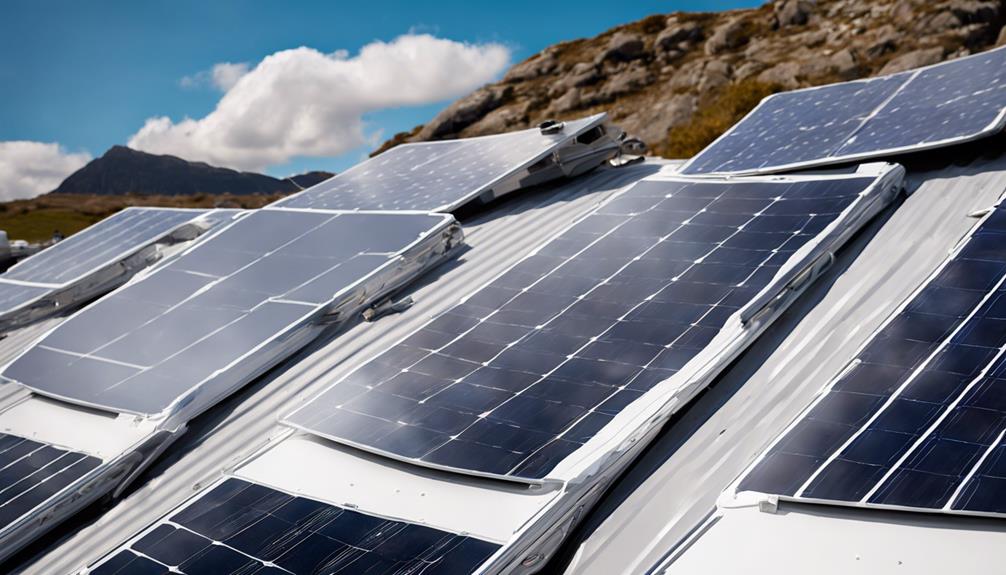
- Marine hardening: Use marine‑rated panels, corrosion‑resistant mounting and connectors, and plan for UV, salt spray and mechanical flexing—offshore conditions shorten generic rooftop-panel lifetimes.
- Certification & safety: Check classification society or local regulator requirements for battery installations, ventilation, fire suppression and electrical isolation.
How to estimate PV yield for your boat (mini calculation)
Assumptions: 4 m² of panels, 20% cell efficiency, site insolation 5 kWh/m²/day.
Daily energy ≈ area × insolation × efficiency = 4 m² × 5 kWh/m²/day × 0.20 = 4 kWh/day.
Interpretation: 4 kWh could supply low-speed propulsion for short trips or reduce shore charging needs, but is modest compared with large propulsion draws. Always run a site-specific PVWatts or NSRDB simulation for accurate numbers.
Performance, costs and environmental tradeoffs
Electrification raises upfront CAPEX (batteries, power electronics) but reduces fuel and maintenance OPEX. Battery pack prices have fallen substantially — BloombergNEF reported average pack prices near $115/kWh in 2024 — improving lifecycle economics for many use cases. Environmental benefits are strongest operationally (no exhaust emissions while operating), but lifecycle emissions depend on PV and battery manufacture and end‑of‑life treatment. Be explicit whether “zero‑emission” refers to operational or lifecycle boundaries.
What to avoid claiming
- “Solar boats eliminate fuel for all missions.” Incorrect for most long-range or heavy-weather operations.
- “Standard rooftop PV works fine offshore.” Marine environments require marine‑rated PV and components.
- “Any boat can be cheaply converted to solar-only propulsion.” Retrofits can be costly and constrained by space, weight and certification.
- “Battery cost and safety are solved.” Costs have fallen, but chemistry choices, BMS, thermal management and approvals remain crucial.
Buyer checklist
- Define mission profile: typical speed, range, passenger/load and hotel loads.
- Ask for modeled PV yield using local irradiance data and clear assumptions (area, tilt, efficiency, shading).
- Request battery chemistry, cycle life, warranty, BMS details and thermal management plans.
- Verify marine‑rated components and corrosion protection, and ask about classification/regulatory compliance.
- Plan for monitoring: energy yield, state of charge behavior, and maintenance intervals.
Further reading
For technical overviews and case studies, consult recent review literature on solar energy in maritime transport, NREL PV resource tools (PVWatts/NSRDB) for site modeling, and project reports on demonstration vessels (e.g., PlanetSolar and ADITYA) and industry analyses of battery cost trends.
Note: When publishing vessel-specific performance or savings numbers, validate against operator or manufacturer documentation and show all assumptions (panel area, efficiency, insolation, battery reserve) used in any worked example.