Quick answer
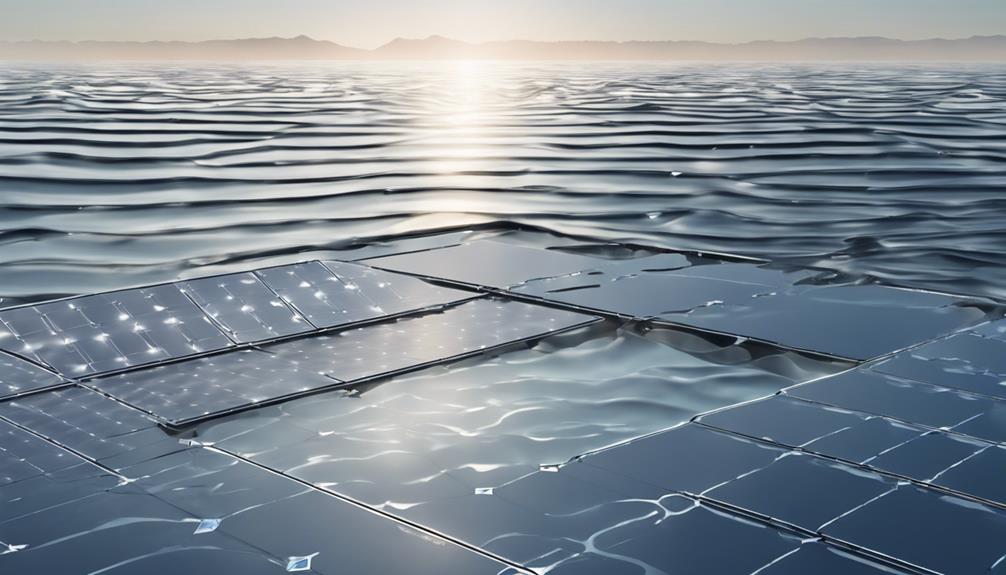
When people search for “ocean-going solar panels” they usually mean floating photovoltaic systems deployed in saltwater: marine FPV and the more exposed subset called offshore floating photovoltaics (OFPV). These use standard PV modules mounted on purpose-designed floating platforms with moorings, electrical export systems, and marine-grade components. Sheltered coastal FPV is already commercial in limited settings; fully exposed offshore arrays are still being proven through pilots and demonstrations.
What offshore floating solar is — and what it isn’t
Floating photovoltaics (FPV) is the umbrella term for PV modules mounted on floating structures. Marine FPV covers FPV in saltwater or estuaries; within that, a useful distinction is nearshore systems in relatively protected waters and OFPV for designs intended for open, energetic seas. This is a practical classification, not a universal legal definition.
What offshore floating solar is not: rooftop panels on boats or small craft, or ordinary reservoir FPV. Those systems face very different engineering, permitting, and cost conditions than marine or open-ocean arrays.
How a marine FPV system works
Core components are similar across designs but are adapted for marine conditions:
- PV modules mounted on a floated platform or pontoons; modules may be close to the water or elevated to reduce spray exposure.
- Purpose-built floating structure with corrosion-resistant materials and flexible connections to handle motion.
- Station-keeping: moorings, anchors, or dynamic systems sized for local waves, wind, currents, and seabed type.
- Marine electrical gear: junction boxes, cables, inverters, protection and earthing adapted for humidity, salt and movement.
- Export cable and connection arrangement to shore or to a local load; sometimes batteries or microgrids for islands or remote facilities.
- Operations and maintenance access: vessels, scheduled weather windows, and remote monitoring systems for condition-based repairs.
- Land-constrained islands and coastal communities that currently import fuel.
- Ports, harbors, and industrial waterfronts with protected water and onsite electricity demand.
- Co-location with offshore wind where infrastructure or vessel logistics may be shared.
- Remote offshore facilities or aquaculture sites where local generation reduces fuel delivery.
- Dynamic loading: waves and wind produce cyclic stresses, slamming, platform motion and electrical mismatch risk from changing tilt and orientation.
- Station-keeping: moorings and anchors must match local metocean and seabed conditions.
- Marine durability: salt, humidity, UV, biofouling and fatigue affect floats, frames, cables and connectors.
- O&M access: inspections and repairs need vessels and weather windows, raising operating costs.
- Electrical export: long subsea cables, grid connection timing and protection systems can be decisive.
- Installation & decommissioning: port capacity, towing and lifting logistics are significant project items.
Why sheltered water and open ocean are different
| Factor | Nearshore / Sheltered | Exposed Offshore (OFPV) |
|---|---|---|
| Exposure | Lower waves and currents; calmer weather windows | Large waves, stronger currents, frequent storms |
| Mooring & station-keeping | Simpler anchors; shallower seabed options | Robust multi-point moorings and longer catenary/taut systems |
| Materials & durability | Standard marine-grade components often suffice | Heavier corrosion protection, fatigue-resistant designs, anti-fouling measures |
| O&M access | Easier access, cheaper inspections and repairs | Vessels, weather windows, and higher logistics costs |
| Market maturity | Established commercial installs in protected sites | Pilot and demonstration stage; operational knowledge being built |
Where it may make sense
Potential candidate uses—each requiring site-specific study rather than automatic assumptions—include:
Why the open ocean is hard
Engineering and operations challenges explain why OFPV is still demonstration-led:
Current state of the technology
Offshore floating solar is progressing through pilots that aim to demonstrate survivability, installation methods, electrical integration and environmental monitoring rather than asserting broad commercial readiness. A representative example is the Merganser pilot in the Dutch North Sea: a 0.5 MWp, six-platform offshore test installed roughly 12 km off Scheveningen in July 2024, developed to gather operational and environmental data. Research bodies and industry groups are publishing guidance and recommended practices—useful but not a sign that every offshore risk is solved.
Environmental, navigation and permitting considerations
Environmental effects are site- and design-specific. Possible pathways include shading, altered hydrodynamics, seabed impacts from anchors, wildlife interactions, and material leakage or debris risk. Evidence specific to fully exposed OFPV remains limited, so best practice calls for baseline studies, monitoring, stakeholder engagement and adaptive mitigation. Navigation, fishing, defense and recreation uses must also be coordinated through planning and permitting processes.
Bottom line: is it practical?
In protected marine settings, floating solar can be practical for selected sites—especially where land is scarce and demand is near the water. In fully exposed ocean settings, OFPV is promising but remains demonstration- and pilot-led: projects must prove long-term reliability, cost competitiveness and environmental acceptability on a case-by-case basis.
FAQ
Can solar panels float in the ocean? Yes—PV modules can be mounted on floating platforms designed for marine conditions, but open-ocean exposure raises engineering and operational challenges.
Is offshore floating solar the same as reservoir floating solar? No. Reservoir and sheltered-water FPV face much milder waves, currents and access constraints than open-ocean OFPV, so maturity and costs differ.
Can it power an island? Potentially. Islands with limited land and high fuel costs are a practical candidate, but success depends on connection, storage needs, and reliable O&M plans.
Does it work in rough water? Some designs are being tested for energetic seas, but fully exposed installations require robust mooring, materials and maintenance strategies; this is still under demonstration.
Can it share an offshore wind farm? Co-location is being explored because of possible synergies in spacing, vessels and grid infrastructure, but combined projects need careful planning and regulatory approval.
Is it environmentally safe? Effects are not universally positive or negative—project-specific assessment, monitoring and mitigation are essential.
For planners and communities: treat OFPV as an advancing technology that may be right for particular sites after careful engineering, environmental study and stakeholder engagement, not as a one-size-fits-all solution.