Welcome to the Solar System
The Solar System is a big neighborhood in space. It has one star, the Sun, and many things that move around it. Planets, dwarf planets, moons, asteroids, and comets all belong to the Solar System. There is a lot of empty space between them, much more than most pictures show.
Meet the Sun
The Sun is a star. It is a hot, glowing ball of gas. The Sun gives light and warmth. Its gravity keeps the planets and other objects moving around it. Long ago, about 4.6 billion years, the Solar System formed from a cloud of gas and dust.
Eight Planets: Meet Them in Order
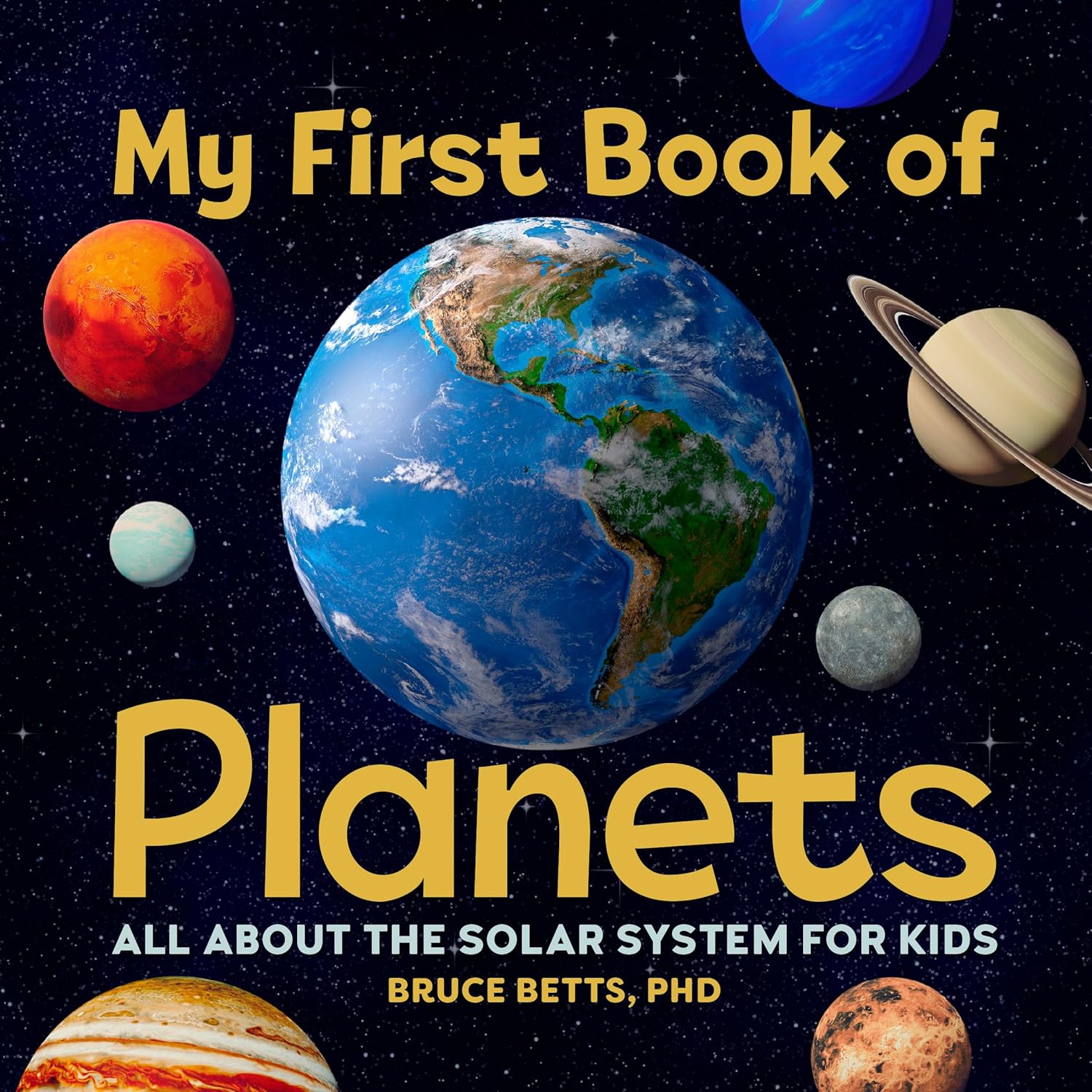
There are eight planets. Here they are from closest to the Sun to farthest away. Each line has a short, simple fact you can remember.
- Mercury: The smallest planet and closest to the Sun. Its surface has many craters.
- Venus: Covered in thick clouds and very hot. It is about the same size as Earth but much hotter.
- Earth: Our home. The only world where life is currently known.
- Mars: The Red Planet. Its soil has rusty, iron-rich dust.
- Jupiter: The biggest planet. It has colorful clouds and a huge storm.
- Saturn: Famous for bright rings made of ice and rock pieces.
- Uranus: An ice giant that spins on its side, as if rolling around the Sun.
- Neptune: The most distant planet and very windy. It is also an ice giant.
Rocky Planets, Gas Giants, and Ice Giants
The first four planets—Mercury, Venus, Earth, and Mars—are called rocky planets or terrestrial planets. They have solid, rocky surfaces you could stand on.
Jupiter and Saturn are gas giants. They are very large and made mostly of light gases like hydrogen and helium. They do not have a solid surface like Earth.
Uranus and Neptune are called ice giants. Inside them are materials like water and ammonia mixed with gas. The word “ice” here means different kinds of cold, dense material, not frozen playground ice.
What Is a Planet? What Is a Dwarf Planet?
A planet is an object that orbits the Sun, is nearly round from its own gravity, and has cleared most other objects out of its path. A dwarf planet also orbits the Sun and is nearly round, but it has not cleared its neighborhood of other objects. Dwarf planets are not moons.
Pluto used to be called the ninth planet. Today Pluto is a dwarf planet. It lives far out in a place called the Kuiper Belt and has moons, including a big one named Charon. Ceres is a dwarf planet that lives in the asteroid belt between Mars and Jupiter.
Moons, Rings, Asteroids, and Comets
- Moon (natural satellite): A rock that orbits a planet or a dwarf planet. Many planets have moons.
- Rings: Bands of ice and rock that circle some planets. Saturn’s rings are the most famous, but other big planets have rings too.
- Asteroids: Small rocky bodies, mostly found in the asteroid belt between Mars and Jupiter.
- Comets: Icy bodies that make bright comas and tails when they come near the Sun.
- Kuiper Belt: A distant rim of icy objects beyond Neptune. Pluto is one of those objects.
How Far Are the Planets?
The planets are very far apart. Astronomers use a simple space measuring stick called an astronomical unit, or AU. One AU is the distance from Earth to the Sun. This helps scientists say how far planets are without huge numbers of miles or kilometers.
Exploration: Spacecraft and Discoveries
Robotic spacecraft have visited many places in the Solar System. They send back pictures and facts. For example, the New Horizons spacecraft flew past Pluto in 2015 and showed us new views of that dwarf planet. Scientists are still learning from these missions. What would you like to explore?
Quick Review and a Little Activity
Remember the planet order: Mercury, Venus, Earth, Mars, Jupiter, Saturn, Uranus, Neptune. A fun way to learn it is with a short sentence: “My Very Educated Mother Just Served Us Noodles.” Say it out loud as you point around a circle and pretend each word is a planet.
Activity: Draw a big circle for the Sun. Then add eight small circles for the planets. Put the rocky planets close to the Sun and the big giants farther out. Try drawing rings for Saturn. Ask an adult to help you label each planet.
Scientists are still learning about the Solar System. New discoveries are always possible. Keep asking questions and looking up at the night sky.