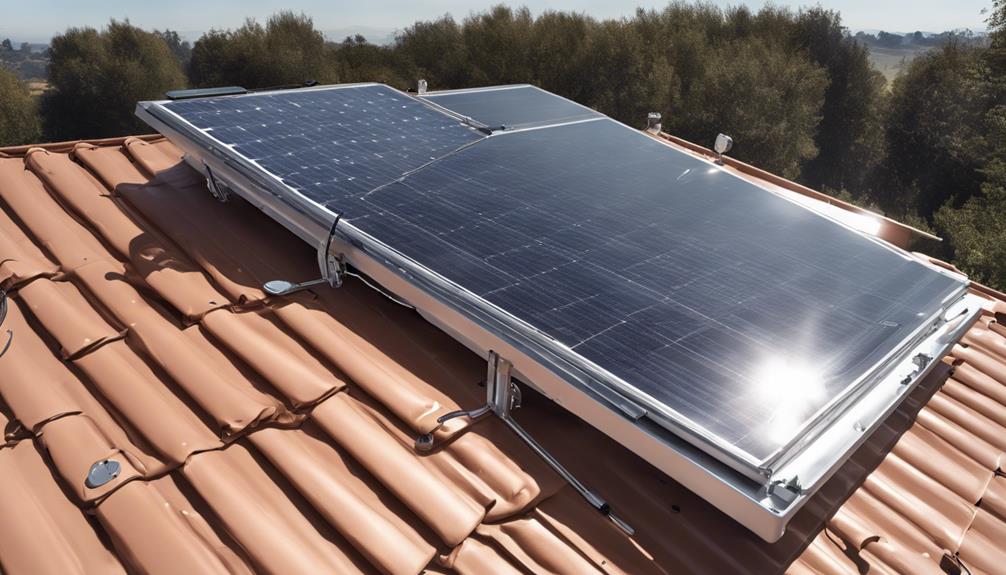
A rooftop project with two purposes
In the early 2000s The Green Project in New Orleans installed a rooftop solar photovoltaic (PV) system as an explicit experiment in both onsite energy and public education. The installation was framed at the time as a small, grid-connected demonstration: a way to reduce purchased electricity for a nonprofit building while giving visitors, students, and volunteers a tangible example of how distributed generation works.
What the system was
Archival descriptions of the project report a rooftop solar array made up of 72 PV modules rated at 85 watts each, for a combined nameplate capacity of about 6.12 kW (72 × 85 W = 6,120 W). Those figures come from project-era reporting and should be read as historical specifications rather than a current inventory or performance guarantee.
In simple terms: PV modules convert sunlight into direct-current electricity; an inverter converts that electricity into alternating current for building use and for interconnection with the utility. Because this was a grid-connected, behind-the-meter solar installation, the building could use its own generation first and then send any excess to the utility grid under whatever compensation rules applied at the time.
Benefit 1: Reducing purchased electricity
One immediate benefit of onsite generation is that it can reduce the amount of electricity a building must buy from the utility. The project’s original coverage estimate—reported in contemporary accounts as an expected roughly 20% of the organization’s electricity needs during the system’s early months—was a forecast from the project period, not a measured long-term outcome. Nevertheless, small rooftop PV systems generally offset a portion of daytime usage and can lower utility purchases and bills depending on local rates and building load patterns.
Benefit 2: Demonstrating distributed solar
Beyond direct bill effects, the array served as a solar education demonstration. A visible rooftop installation gives students, volunteers, and neighborhood visitors a concrete way to learn about electricity conversion, inverters, and two-way energy flows with the grid. For an organization whose programs include hands-on environmental education, the PV system provided a real-world classroom for topics like energy basics, demand reduction, and how distributed energy resources (DERs) fit into a larger grid.
Benefit 3: Supporting the organization’s broader mission
The Green Project’s core mission remains creative reuse—diverting usable materials from landfills and cultivating respect for their value. The organization currently reports several self-reported metrics: recycling approximately 40,000 gallons of paint annually, diverting about 2 million pounds of materials each year, and educating more than 700 residents annually. The rooftop PV installation was complementary to these activities: it framed sustainability as both material reuse and mindful energy use, and reinforced the nonprofit’s environmental-education programming.
Benefit 4: Using an existing commercial roof
A warehouse roof is often a practical site for distributed generation: it avoids land-use impacts associated with ground-mounted installations and makes use of existing built space. Contemporary accounts noted the building’s large, flat roof as a reason the site was appropriate for a small commercial rooftop array.
How grid connection worked (accurately explained)
A grid-connected PV system supplies onsite loads first; when generation exceeds onsite demand, electricity can be exported to the utility. The financial treatment of exported electricity—whether it earns credits on a bill and how those credits are calculated—depends on the utility’s tariff and state rules. It is therefore important to treat historical descriptions of meter behavior cautiously: exported energy enters the distribution system and is managed by the utility rather than being directly routed to a named neighbor.
What changed since the original project
The project was presented historically as a notable local installation, but claims that it was the “largest” in Louisiana or New Orleans are archival and no longer reflect the current landscape; Louisiana and Entergy now list much larger utility-scale and commercial solar resources. Also, no public contemporary source was found to confirm the array’s current operational status, ownership, or unchanged configuration, so the installation should be read as an early local example rather than a present-day benchmark.
Conclusion
The Green Project’s rooftop PV installation combined modest onsite generation with a deliberate educational mission. Historically funded and supported by corporate and local partners, the system illustrated how distributed energy can lower purchased electricity, provide a hands-on learning tool, and sit naturally alongside material-reuse efforts. As a case study it shows how small, behind-the-meter solar projects can reinforce an organization’s broader sustainability work while also giving a community a visible demonstration of renewable-energy technology.
Project-era partners and notes
- Archival reports name corporate supporters and equipment suppliers involved in the early project; contemporary verification of those details is archival in nature.
- The Green Project is currently located at 2831 Marais Street, New Orleans, LA 70117, with store hours listed Wednesday–Saturday, 11 a.m.–5 p.m., and continues to operate salvage, paint recycling, and environmental-education programs.