A compact, reliable solar setup can keep lights, a CPAP and a 12V fridge running on the road — if you size it correctly, choose the right components, and wire it safely.
Which system fits you?
Pick a profile then use the sizing checklist below to refine decisions.
- Day trips / tailgating — small portable panel (50–200 W) or a portable power station; good for phones, lights, Bluetooth speakers. Recommendation: portable panel + integrated MPPT station for plug‑and‑play.
- Weekend camper / part‑time vanlife — roof array 200–600 W, 100–300 Ah LiFePO4 (12 V equiv.), MPPT charge controller, 1000–2000 W inverter depending on AC loads. Recommendation: roof panels + LiFePO4 for multi‑day autonomy.
- Full‑time boondocker — 600 W+ array, multi‑kWh LiFePO4 bank, at least one robust MPPT per array, large inverter if AC loads needed. Recommendation: custom system (not just a portable station) for scalability and cost efficiency.
How camping solar systems work (quick primer)
A basic mobile PV system has four parts: solar panels (generate DC), a charge controller (regulates and optimizes charging), batteries (store energy), and an inverter (if you need AC). When sizing, work in energy units: watts (W) for instantaneous power and watt‑hours (Wh) for energy per day.
Panel output is estimated using Peak Sun Hours (PSH) — the daily equivalent hours at 1,000 W/m². Use NREL PVWatts or the NSRDB to find PSH for your campground and season rather than assuming a generic number (NREL PVWatts manual).
5‑step sizing checklist (with formulas)
- List devices & calculate daily Wh: sum each device: Watts × hours/day = Wh/day. Examples: phone charger (~10–20 Wh/day), LED lights (~25 Wh/day), CPAP (~240–300 Wh/night without humidifier), 12V compressor fridge (typical range 250–900 Wh/day; use manufacturer or measured values). (Fridge & appliance ranges)
- Decide autonomy & buffer: autonomy days (days you want to run without sun), and buffer (recommend +10–20% for cloudy days). Required usable Wh = daily Wh × autonomy days × buffer.
- Battery sizing: Battery Wh capacity = Required usable Wh ÷ allowable Depth of Discharge (DoD). For LiFePO4 use DoD ≈ 0.85–0.90; for AGM ≈ 0.50. Convert to Ah: Ah = Wh ÷ system voltage (e.g., 12 V). Example: for 800 Wh/day, 1 day autonomy, 1.2 buffer → 960 Wh usable. LiFePO4 pack: 960 ÷ 0.9 ≈ 1,067 Wh → ≈ 89 Ah at 12 V.
- Panel array sizing: Array (W) ≈ Daily Wh ÷ PSH ÷ system efficiency. Use a conservative derate (system efficiency) of 0.70–0.85 to cover wiring, temperature, MPPT losses and shading. Example: 800 Wh/day, PSH=5, derate=0.75 → 800 ÷ 5 ÷ 0.75 ≈ 213 W array.
- Charge controller & inverter sizing: Charge controller current ≈ array watts ÷ controller voltage (round up, pick MPPT for best yield). Inverter continuous rating ≥ expected continuous AC loads; ensure surge rating covers starting currents for compressors (fridges/AC). Many fridges can have starting surges 2–5× running current — check manufacturer or use a conservative multiplier.
Worked mini example
Daily loads: phone/lights 50 Wh, CPAP 240 Wh, fridge 500 Wh → total 790 Wh/day. PSH=4 (cooler/cloudy site), derate=0.75 → array ≈ 790 ÷ 4 ÷ 0.75 ≈ 263 W. Battery for 1 day, 20% buffer: usable 948 Wh; LiFePO4 (DoD 0.9) → 1,054 Wh ≈ 88 Ah @12 V.
Components & selection tips
Panels
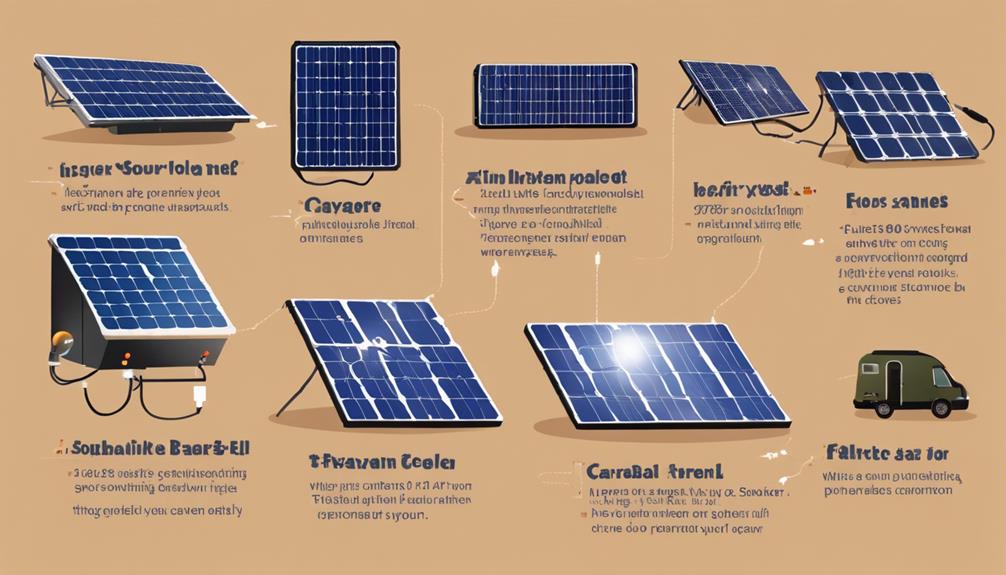
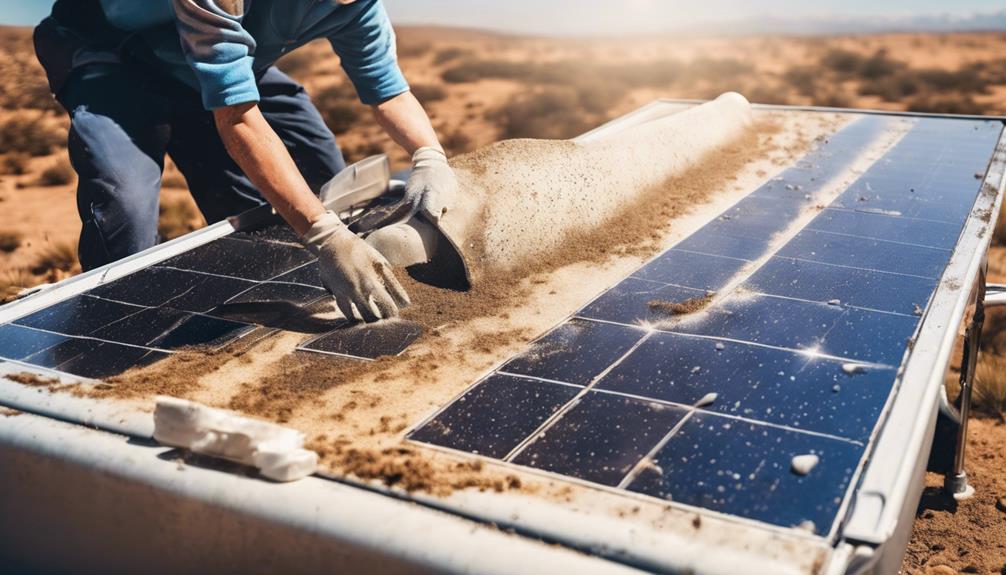
Roof‑mounted panels are most cost‑effective per watt; portable folding panels add flexibility and tilt optimization. Watch temperature coefficient (hot modules produce less) and avoid shading. Consider MC4 connectors and tilt legs for portable panels.
Charge controllers
MPPT controllers are worth the premium for mobile systems — they often harvest 10–30% more energy than PWM, especially in low light or with higher‑voltage arrays (Victron MPPT overview).
Batteries
LiFePO4 is now the recommended chemistry for daily‑cycled camping systems: higher usable capacity, longer cycle life, lighter weight and better round‑trip efficiency than AGM. Note cold‑charge behavior: many LiFePO4 packs/BMS will block charging below roughly 0–5°C (some specs cite ~25°F / −4°C) — insulate the battery, use a battery heater or avoid charging below the pack’s rated temp (LiFePO4 spec examples).
Inverters & portable stations
Choose an inverter with adequate continuous and surge ratings. Portable power stations are convenient for occasional use (many now use LiFePO4 and integrated MPPT), but roof‑mounted + dedicated battery systems scale better and are cheaper per Wh for full‑time use (portable station reviews).
Installation & safety checklist
- Fuse the positive conductor at the battery (close to the battery) — always place overcurrent protection near the source.
- Size cable by ampacity and acceptable voltage drop; calculate current = watts ÷ voltage and choose gauge to keep drop ≤3% for long runs. Reference wiring guides (UMD wiring primer).
- NEC considerations: NEC Article 690 and 2023 updates include DC arc‑fault and disconnect rules; local AHJ adoption varies. As of June 20, 2026, NEC 2023 is the current model code — check local requirements and get a licensed electrician for AC interconnection or roof penetrations (NEC 2023 overview).
- Avoid DIY AC tie‑ins unless you are licensed — mistakes can be dangerous and subject to local code/permit rules.
Not legal advice — always confirm with your local AHJ or a licensed electrician for permit, code and inspection requirements.
Troubleshooting & common mistakes
- Under‑sized array for winter PSH — check seasonal PSH rather than a single average.
- Ignoring inverter surge current → fridge or pump won’t start.
- Charging LiFePO4 in freezing temps → permanent damage; use thermal mitigation.
- Poor wire sizing and missing fuses → overheating and fire risk.
When to call a pro
Hire a licensed electrician for AC interconnection, roof penetrations, structural mounting that affects the RV roof warranty, or when local permits/inspections are required.
Resources
- NREL PVWatts / PV basics: PVWatts manual
- MPPT vs PWM: Victron Energy
- LiFePO4 spec & cold‑charge info: Battle Born example: OffGridBenchmark review
- RV appliance energy ranges: OffGridRVHub
- NEC 2023 solar code summary: GreenLancer overview
Want worked examples for three specific campsites (I can pull PSH from PVWatts and produce panel + battery + controller + inverter numbers)? Tell me the three cities and target loads and I’ll calculate them.