Quick answer: is solar camping gear worth it?
Short version: yes — for sunny, multi-day trips, car camping, overlanding, basecamp, photographers, and anyone running AC or 12 V loads (fridge, CPAP). For short hikes a charged power bank and headlamp are usually simpler and lighter. Solar becomes valuable when you need ongoing recharge in the field rather than a single top-off before you leave.
How a camping solar setup actually works
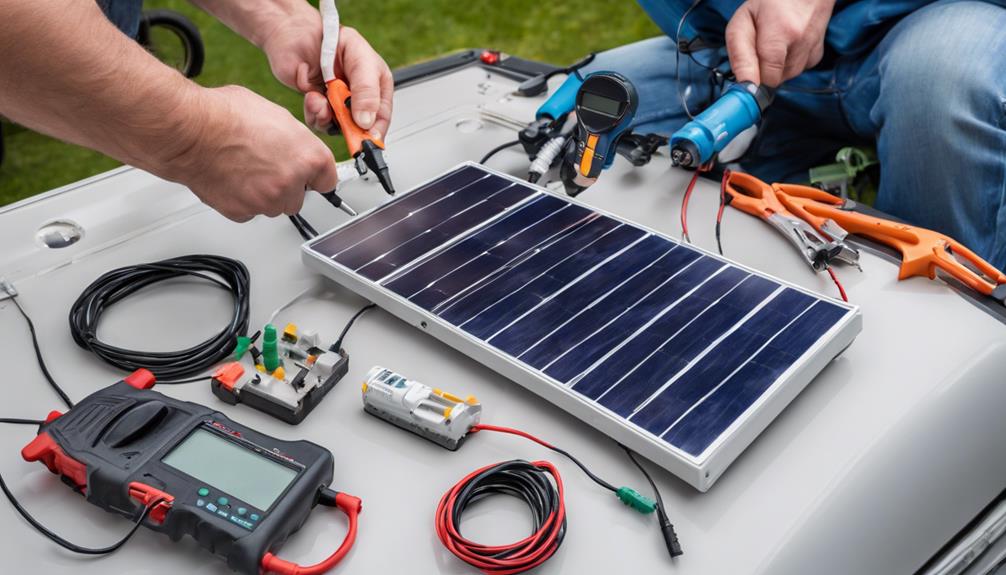
Think of a practical system as three parts: PV panel → battery storage → device outputs. A portable solar panel (foldable solar panel for panels that pack up) harvests sun and recharges a battery pack or portable power station. The battery stores energy in watt-hours (Wh); devices draw power in watts (W) or Wh over time. Charging phones directly from a panel can be unreliable because sun, shade, angle, and clouds fluctuate — charging a battery first creates the buffer.
Key terms: USB-C Power Delivery (USB-C PD) for fast charging; MPPT charge controllers for better solar-to-battery efficiency; LiFePO₄ / LFP refers to a common safer, longer-lived battery chemistry in some power stations; IP rating describes dust/water resistance. Use Wh (not mAh alone) to compare stored energy.
What solar camping gear actually works
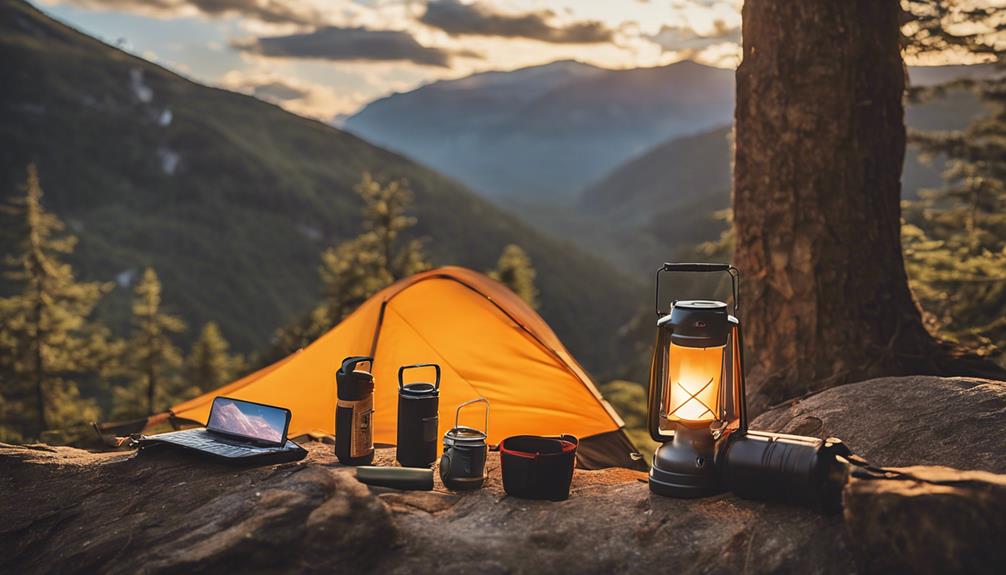
- Solar lanterns: Useful for campsite light. Compare lumens, runtime, battery Wh, USB-C inputs, and IP rating. Treat built-in panels as trickle/emergency charging unless tested.
- Power banks / battery packs: Best for short trips and backpacking. A 10,000–20,000 mAh pack (convert to Wh) is a reliable lightweight choice.
- Foldable solar panels: Good for multi-day sunny trips, basecamp, and car camping. Pick panel size to match how fast you need to refill your battery.
- Portable power stations: Use these for AC devices, laptops, CPAP, fridges, and group charging. Compare capacity (Wh), continuous/surge W, solar input limit, USB-C PD wattage, battery chemistry, and safety certifications (e.g., UL categories such as UL 2743).
- Solar cookers and showers: Functional in strong sun but slow and weather-dependent; use a food thermometer (USDA safe poultry temp = 165°F / 73.9°C).
- Water treatment: Boiling is best for killing pathogens; filtering plus chemical or UV disinfection is next. Solar disinfection (SODIS) can help in emergency, but it’s not a reliable primary method for cloudy water.
What’s often overrated
- Tiny solar panels built into lanterns or power banks — usually only trickle charge.
- Direct phone-to-panel charging in variable sun.
- Undersized panels trying to recharge very large power stations in a single day.
How to size your setup (simple steps)
- List devices and estimate Wh needed. Use device watts × hours used, or battery capacity converted to Wh. Example: 10 W light for 5 hours = 50 Wh.
- Add margin. Add 20–50% for conversion losses, clouds, cold, and imperfect angle. Critical devices (CPAP) should be tested with the exact setup beforehand.
- Match battery capacity. Pick a power bank or power station with at least the Wh you need plus margin. Remember inverter inefficiency for AC loads.
- Estimate solar harvest conservatively. Use: panel watts × usable sun hours × derating factor. Real-world derating often halves or reduces rated output due to angle, shading, heat, and dust — use a derating factor like 0.5–0.75 unless conditions are ideal.
Example estimates (rough)
- Phone + lantern weekend: 20–50 Wh battery (a 10,000–20,000 mAh pack) — solar optional.
- Camera/GPS multi-day backpacking: 10–30 W foldable panel + 20–50 Wh battery depending on charge needs.
- Laptop workday: 50–100 Wh battery + higher-watt USB-C PD or inverter; pair with a 60–100 W panel for day recharges.
- CPAP overnight: Measure your CPAP’s Wh draw, add 30–50% margin, and test setup. Bring backups; CPAP is a critical load.
- 12 V fridge at basecamp: Calculate fridge Wh/day and pick a power station plus panel array (60–200 W or larger) suited to daily drain and sunlight.
Field tips for better performance
- Keep panels perpendicular to the sun and reposition during the day.
- Avoid partial shade — a single shadow can cut output heavily.
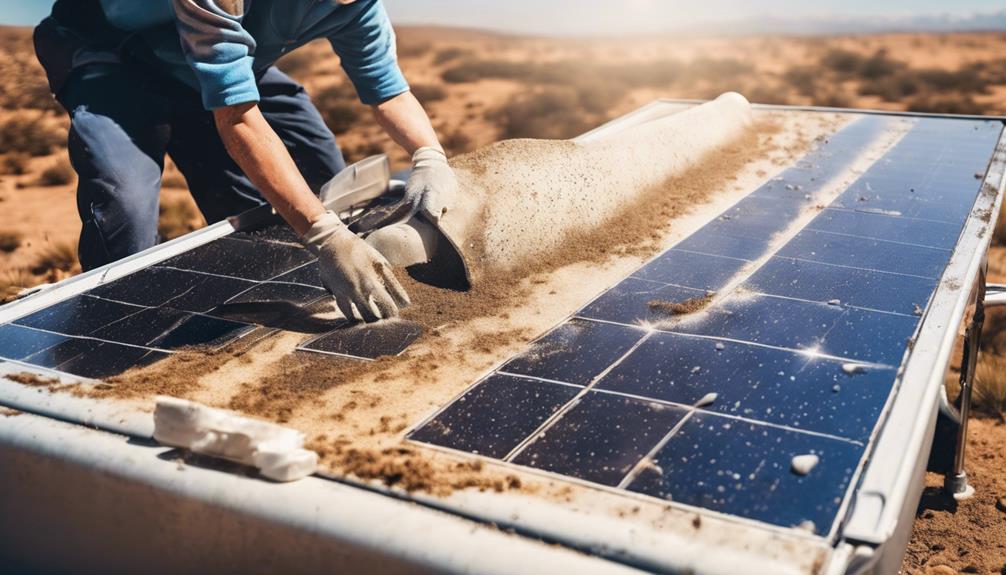
- Keep panels clean and cool; heat reduces output.
- Charge the battery first, then run devices from the battery.
- Keep batteries and power stations shaded and ventilated. Don’t leave them baking on a hot car dashboard.
- Bring spare cables and correct adapters (check USB-C PD wattage limits).
Safety, travel, and disposal
Buy certified gear and watch for swelling, overheating, or damaged cables. FAA rules: up to 100 Wh per battery/power bank is allowed in carry-on; 101–160 Wh requires airline approval; >160 Wh is generally forbidden on passenger aircraft. Spare lithium batteries and power banks must go in carry-on, not checked luggage. Don’t expose batteries to high heat; follow park and agency guidance. Recycle lithium batteries properly — don’t put them in household trash or curbside bins. For solar cooking, use a thermometer and reach at least 165°F (73.9°C) for poultry. For water safety, boiling is best; filters and chemical or UV disinfection are recommended over SODIS for routine use.
Bottom line
Start with a good charged power bank and a reliable lantern. Add a foldable solar panel when your trip is long and sunny enough to justify the weight. Choose a portable power station only when you need AC power, sustained high-watt draws, medical-device reliability, or fridge use. Size using Wh estimates, add 20–50% margin, and estimate daily solar harvest conservatively. Test critical setups — especially CPAP or work rigs — before you leave and follow safety rules for lithium batteries and disposal.