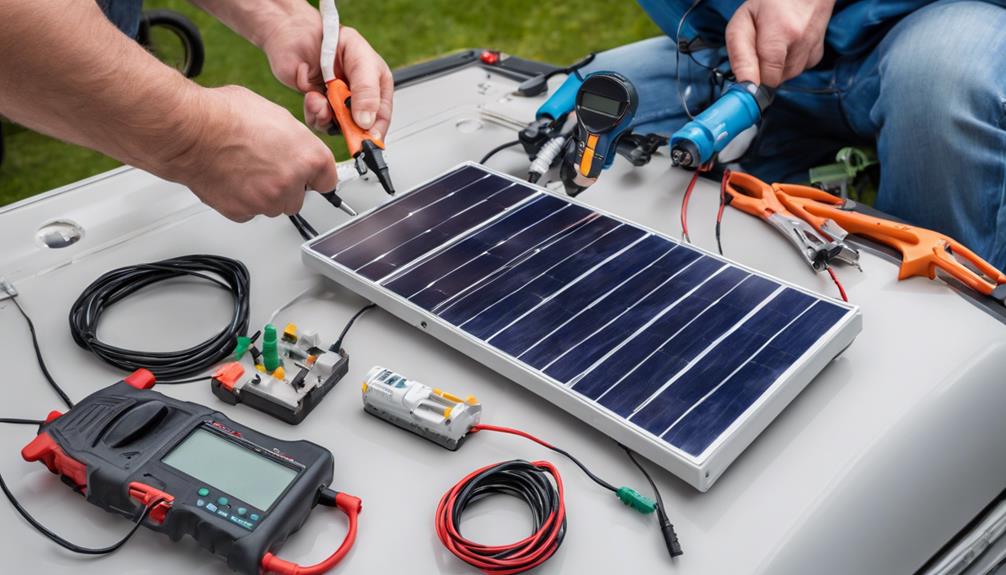
Deciding whether to add photovoltaic panels to your home often starts with one big question: what will the solar panel installation cost be? Understanding the full cost picture—equipment, labor, permits, incentives and long-term savings—helps homeowners make an informed choice. This article breaks down the factors that determine price, shows how to estimate system size, explains how to use solar calculators and cost estimators, and outlines typical cost ranges and financing options so you can evaluate the cost to solar power your home with confidence.
What drives solar panel installation cost?
Several elements contribute to the total price of a solar system for your house. The most significant is system size, measured in kilowatts (kW), which depends on your electricity use and roof characteristics. Panel quality and inverter type also affect price: premium panels and string-plus-microinverter systems cost more upfront but can increase output and reliability. Labor and mounting hardware vary by roof type—steep or complex roofs and specialty mounting for tile or metal roofs increase installation costs. Soft costs like permitting, inspection, electrical upgrades and interconnection fees add to the final bill. If you add battery storage, the solar energy installation cost rises substantially because batteries and additional inverters can be the most expensive component after the panels themselves.
Estimating how many panels you’ll need and the system size
Knowing how many solar panels you will need is key to a realistic solar panel cost calculator result. Start with your average annual electricity consumption in kilowatt-hours (kWh). Divide that by the expected annual output per kW in your location—solar resource maps and many solar calculators provide this—then round up to a system size. For example, a typical U.S. household using 10,000 kWh per year might need a 6 to 8 kW system depending on local sun hours. With most residential panels producing 250 to 400 watts each, that translates into roughly 15 to 30 panels. A solar panel estimator or solar calculator panels tool can convert household usage into panel counts and give a clearer sense of the solar system house cost before incentives.
Using solar calculators and cost estimators effectively
Solar calculators and solar cost calculators are excellent starting points to answer “how much does it cost to install solar panels” for your specific situation. A good solar energy cost estimator asks for your zip code, average electric bill, roof orientation and tilt, and whether you want battery backup. It then estimates system size, expected energy production and payback period. Use multiple tools—solar calculator, solar savings estimator and a solar ROI calculator—to compare numbers. Pay attention to whether the tool includes local incentives, net metering rules and tax credits, because those factors can reduce your out-of-pocket cost substantially. If a calculator provides a range, use the higher end for budgeting to avoid surprises.
Typical cost ranges and the impact of incentives
As of recent national averages, residential solar costs typically fall in the range of about $2.50 to $3.50 per watt before incentives, though local markets vary. That means a 6 kW system could cost roughly $15,000 to $21,000 before tax credits and rebates. Many homeowners benefit from federal or state incentives—such as the federal Investment Tax Credit—reducing the effective cost by a percentage. After applying a 30 percent federal tax credit, the same 6 kW system could drop to approximately $10,500 to $14,700. Additional local or utility rebates, performance-based incentives, and sales tax exemptions further lower the net price. Financing options like solar loans, leases and PACE programs can spread the cost over time; some homeowners find monthly loan payments are similar to or lower than their prior electricity bills.
How much does it cost to add solar panels later, and upgrades to consider
Add-on systems are common when homeowners expand capacity or add battery storage. How much does it cost to add solar panels depends on the scale and whether the initial system was sized to accept future expansion. Adding panels later typically carries higher per-watt deployment costs because some initial design and permitting steps are repeated. If you plan to add storage, consider installing a battery-ready inverter from the start to reduce future upgrade costs. For those asking how much is solar installation when including batteries, expect battery-equipped systems to cost substantially more per watt but to provide backup power and increased self-consumption, which can boost savings in places with time-of-use rates or frequent outages.
Practical use cases and choosing the right approach
Solar systems can be tailored to different homeowner goals. A homeowner focused on maximizing utility bill savings might size a system to cover most household consumption and rely on net metering. A homeowner in a high-electric-rate area may invest in a larger system or add batteries to reduce peak charges. Off-grid or partial off-grid households prioritize battery backup and generation capacity to meet critical loads. New construction projects can integrate solar more efficiently with lower installation costs. Using a solar calculator to test scenarios—full offset, partial offset, or backup-first—helps determine the best balance between cost, energy independence and payback period.
When asking “how much does solar energy cost to install” or “how much would it cost to install solar panels” for your home, gather multiple quotes from local installers, run numbers through a solar panel cost calculator and factor in incentives and financing. A site visit will refine the estimate and reveal roof or electrical upgrades that affect final pricing. With the right planning and accurate solar energy cost estimator tools, many homeowners find that the long-term savings and increased home value justify the upfront investment.
In conclusion, the solar panel installation cost varies widely based on system size, equipment choices, local labor and incentives. Use solar calculators and solar savings estimators to get neighborhood-specific estimates, and consider system sizing, future expansion and financing to find the most cost-effective path to solar power for your home. Careful planning and competitive quotes can help turn the question of how much does it cost to install solar into a clear financial decision that aligns with your energy goals.