Local codes and utility rules vary — always check with your AHJ and a licensed electrician before connecting any self-built PV module to a building or the grid.
Intro
This guide explains what’s feasible for hobbyists who want to make or assemble small photovoltaic (PV) modules as part of the Sloneczna collection: the components, realistic limits, safety and permitting considerations, materials, and a high‑level assembly flow. Read the safety & legal caveat before starting.
Safety & legal caveat (read first)
This article explains PV module manufacturing and safe bench projects. It is not a substitute for local code compliance or licensed electrical work. Do not connect self-built modules to the grid or install them on a roof without inspection and explicit approval from your Authority Having Jurisdiction (AHJ) and the utility. As of July 2026, many jurisdictions require listed modules meeting UL 61730 and installations that meet NEC Article 690.
Quick decision checklist: Is DIY right for you?
- Goal: learning/bench project or powering a critical load? DIY is reasonable for small off‑grid demonstrators and education, not recommended for primary grid‑tied rooftop systems.
- Skills: basic electronics, soldering, careful handling of fragile cells, and safe use of a heat source/laminator.
- Permits & interconnection: AHJ and utility may require listed modules (UL 61730) — homemade modules often fail permitting.
- Budget & time: Factor in the value of your time, lack of warranties, and potential permit/insurance issues; factory modules are often more cost‑effective for permanent installations.
How PV works — quick primer and terminology
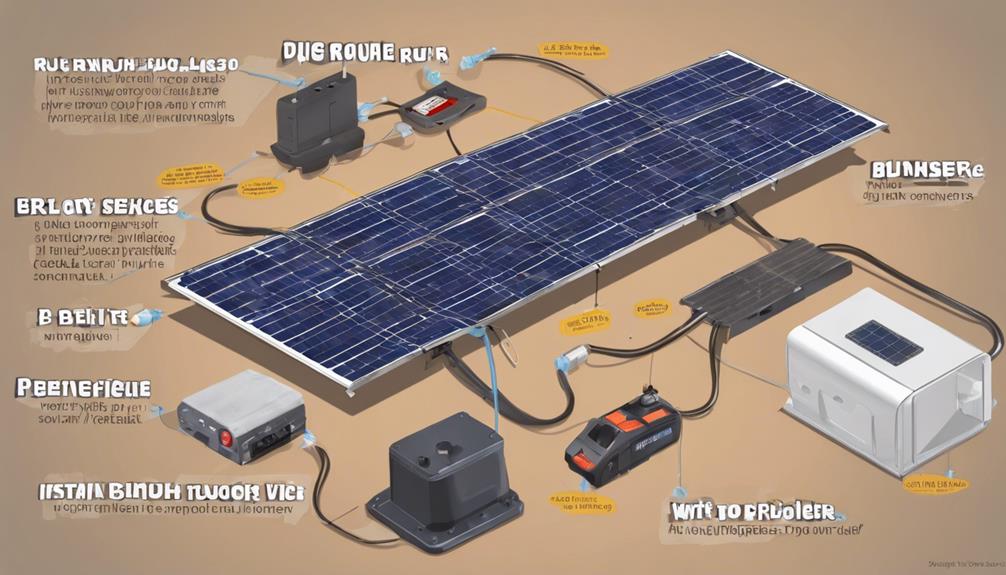
PV cells (solar cells) convert sunlight to DC electricity. Cells are interconnected by tabbing and stringing to form a module (PV module or solar panel). Multiple modules form an array. Important terms: tabbing, stringing, busbar, encapsulant (EVA), backsheet (polymer), tempered glass superstrate, junction box, bypass diodes, lamination, and inverter (string, microinverter, or optimizer) for AC conversion.
What a commercial module contains (and why it matters)
Tempered glass (superstrate)
Encapsulant (EVA)
Solar cells + tabbing
Backsheet / frame
Commercial modules use tempered glass, controlled EVA lamination in vacuum ovens, polymer backsheets, framed edges, UL‑listed junction boxes and bypass diodes. These manufacturing steps and QA testing (thermal cycling, damp heat, UV exposure) materially affect longevity and warranties.
What you can realistically build at home — and what to avoid
- Reasonable DIY projects: small bench modules for education, charging small batteries, garden lighting, or demonstrations (low‑voltage, non‑critical use).
- Avoid: rooftop, grid‑tied panels you plan to interconnect without certification, or claiming 25‑year warranties—factory QA and testing back those claims.
Materials, tools & PPE (bench projects only)
Key materials: matched PV cells (spec sheet-matched), tabbing ribbon, buswire, EVA or alternative encapsulant sheets sold for DIY modules, tempered safety glass (or low‑durability demonstrator covers for short‑life projects), polymer backsheet, UL‑rated junction box, bypass diodes, frame hardware (optional).
Tools & test gear: soldering iron with flux and low‑temperature solder, cell holders, laminator or vacuum bag setup (note: a proper vacuum laminator is hard to replicate at home), multimeter/IV tester, safety glasses, gloves, and a work surface free of static and dust. PPE: eye protection, gloves, and appropriate ventilation when soldering or heating encapsulants.
Label: Not suitable for rooftop/grid‑tied systems unless certified and inspected.
High‑level assembly flow (no grid‑wiring instructions)
- Tabbing & stringing: solder tabbing ribbon to cells and connect strings to reach desired voltage/current.
- Layup: place glass, encapsulant, cell strings and backsheet in order in a clean environment.
- Lamination: cure encapsulant under controlled heat and vacuum/pressure to remove air and bond layers. Proper equipment matters for durability.
- Edge trimming & framing: seal edges, install frame and junction box with diodes and wiring potted to protect connections.
- Testing: measure open‑circuit voltage, short‑circuit current, and IV curve under standard test conditions if possible; check for hot spots and insulation breakdown.
Note: the lamination step and QA testing used by manufacturers are difficult to reproduce at home. This limits expected lifetime and performance of DIY panels.
Standards, permitting & safety (must‑know)
As of July 2026, modern PV module safety standards are UL 61730 (which replaced UL 1703) and many AHJs and utilities require listed/IEC‑harmonized modules for permitting and interconnection (UL Solutions). NEC Article 690 governs PV installation practice; it generally expects listed equipment and qualified installers. Always consult your local AHJ and a licensed electrician for grid‑tied or rooftop work.
Economics & performance expectations
Factory crystalline modules typically have 15–23% efficiency and are backed by warranties with guaranteed degradation profiles; expected degradation is often ~0.5%–0.8%/year depending on product. Recent U.S. installed residential costs are commonly in the roughly $2.5–$3.5/W range before incentives; soft costs (permitting, labor) are a large share. For learning and small off‑grid use, DIY can be cost‑effective, but DIY panels rarely beat factory value when time, risk and missing warranties are included.
Alternatives & recommended paths
- Buy UL/IEC‑listed modules for any rooftop or grid‑connected work.
- Buy bench‑top DIY kits or micro‑module kits for education and hands‑on learning (safer and made for hobbyists).
- Work with a local NABCEP‑certified installer or community college course for larger projects and code‑compliant installation.
Short FAQ
Will a DIY module get permitted? Often not—many AHJs require listed modules (UL 61730) and will not approve unlisted, self‑built panels for rooftop or grid interconnection.
Can I test a DIY module? You can measure Voc and Isc with a multimeter and perform IV curve tests with portable testers; thermal imaging helps find hot spots. These are useful for bench validation only.
What about recycling? End‑of‑life PV recycling is an emerging market—store and dispose modules per local e‑waste rules; consider recycling programs for commercial modules.
Further reading
- UL Solutions — PV module safety standards (UL 61730): https://www.ul.com/news/ul1703-ul-61730-pv-module-safety-standards-updates-making-transition
- NEC Article 690 summaries and permitting guidance: https://www.solarpermitsolutions.com/blog/nec-690-4-solar-pv-general-requirements
- Handbook of Photovoltaic Science & Engineering (manufacturing overview): https://dokumen.pub/handbook-of-photovoltaic-science-and-engineering-2ed.html
- LBNL / NREL cost and deployment reports: https://eta-publications.lbl.gov
Next steps
If you want to proceed: perform an energy audit, check your local AHJ and utility interconnection rules (SolarAPP+ tools can help), consider a bench kit or an educational course (NABCEP or community college), and consult a licensed electrician before any rooftop or grid‑connected work.