Introduction
Solar photovoltaic (PV) systems convert sunlight directly into electricity using the photovoltaic effect. This article explains, in plain language, how sunlight becomes usable power for a home or business, and how modules, inverters, batteries, and the utility grid fit together. It focuses on solar PV (electricity-producing) systems, not solar water heaters or large concentrated solar plants.
The short version
Simple flow:
Sunlight → solar cells → DC electricity → inverter → AC electricity → home, battery, or grid
Numbered sequence:
- Sunlight hits the PV module.
- Photons transfer energy to electrons in semiconductor material inside each PV cell.
- An internal electric field guides those charges into a usable DC (direct current) flow.
- Metal contacts collect the DC electricity from cells and modules.
- An inverter converts DC to AC (alternating current) for household use or export to the grid.
What happens inside a solar cell?
A PV cell (also called a solar cell) is a small semiconductor device — commonly made from crystalline silicon — that responds to light. When photons from sunlight strike the cell, they can transfer energy to electrons in the semiconductor. The cell’s layered structure creates an internal electric field that pushes these excited electrons into an external circuit, producing a flow of DC electricity. This process is called the photovoltaic effect.
How solar cells become a panel
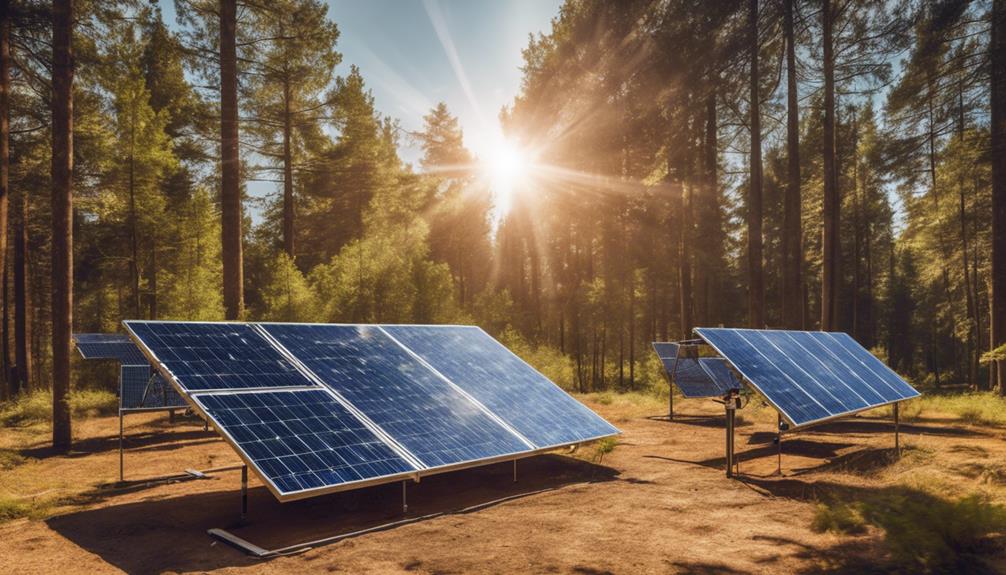
Several cells are wired together and sealed under protective glass and plastic to form a PV module, commonly known as a solar panel. Modules include metal frames, encapsulant materials, and junction boxes with wiring. Multiple modules connected together form a solar array. Racking or mounting hardware secures modules to a roof or ground structure and helps orient them for better sunlight exposure.
How solar electricity powers a home
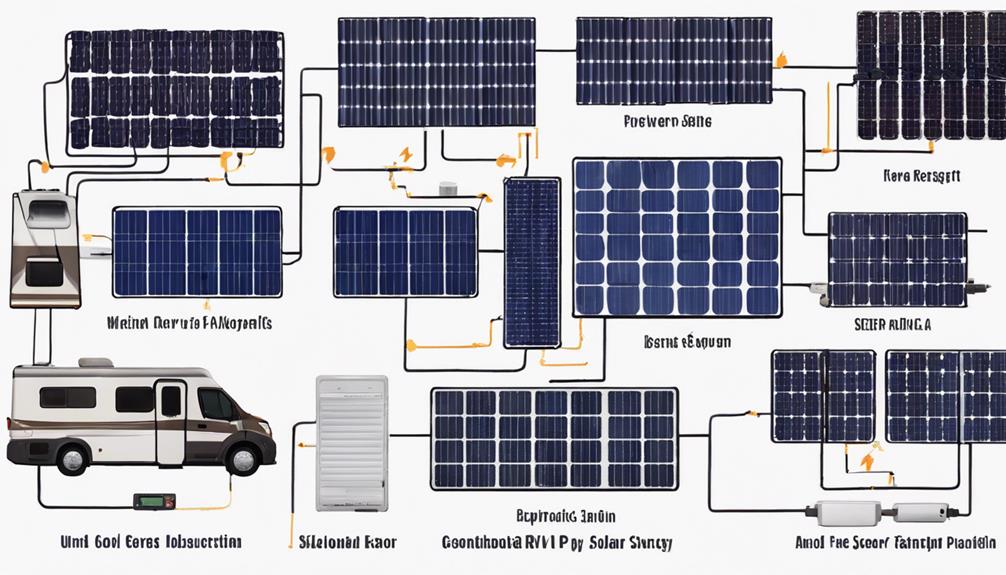
PV modules produce DC electricity. An inverter — either a single string inverter serving many modules or module-level microinverters — converts DC into AC, the type of electricity most household appliances use. The inverter sends AC power to the building’s electrical panel so the home can use it immediately. Monitoring hardware or software often tracks production and system status.
What happens to extra electricity?
When a PV system produces more electricity than the building is using, there are three main possibilities:
- It may be used immediately by other loads in the building.
- It can be stored in a battery (solar-plus-storage) for later use, including after sunset.
- It may be exported to the utility grid if the system is grid-tied; compensation depends on local utility rules such as net metering or net billing.
Note: utility export programs and financial incentives vary by location and change over time. Check local utility policies and official resources before assuming export compensation or incentives will apply.
Do solar panels work on cloudy days or at night?
Panels produce electricity whenever sunlight reaches them, so output falls under heavy cloud cover but does not always drop to zero on cloudy days. PV systems do not generate ordinary solar electricity at night. Nighttime power must come from the grid, a battery, or another generation source.
What affects solar panel output?
Production varies with many factors, including:
- Geographic location and available sun hours
- Time of day and season
- Weather and cloud cover
- Shading from trees or nearby structures
- Roof or panel orientation and tilt angle
- Panel temperature (cells generally work slightly better at cooler temperatures)
- System design, wiring, and inverter type
Conversion efficiency (the percentage of sunlight turned into electricity) matters, but total energy delivered depends on system size, placement, and local conditions.
Solar PV versus solar thermal
Solar PV produces electricity. Solar thermal systems (including solar water heaters) capture sunlight as heat to warm water or another fluid. Concentrating solar power (CSP) uses mirrors to focus sunlight to create high temperatures for large-scale electricity generation. These technologies serve different purposes and are not interchangeable.
Do solar panels work during a power outage?
Standard grid-tied PV systems are designed to shut down during utility outages for safety reasons (to avoid energizing lines while workers repair them). To provide backup power during an outage, a system needs batteries and an inverter or control equipment specifically configured for islanding or backup operation. Off-grid systems are designed to operate without a utility connection but require adequate storage and design to meet demand.
How long do solar panels last?
Modern PV modules are typically designed to last 25 years or more. Many crystalline-silicon modules retain a large portion of their original power (often more than 80%) after 25 years, though actual performance declines slowly over time. Other components, especially inverters and batteries, commonly require replacement sooner.
Key takeaway
Solar PV turns sunlight into DC electricity in semiconductor cells; that electricity is collected in modules, converted to AC by an inverter, and used by the home, stored in batteries, or exported to the grid. System performance depends on site conditions, equipment choices, and utility rules. Solar PV can reduce reliance on conventional grid electricity, but outcomes vary by location and system design.
Glossary (brief)
PV cell (solar cell): individual semiconductor device that converts light into DC. PV module (solar panel): multiple cells in a protected casing. Solar array: several modules connected together. Inverter: device converting DC to AC. Grid-tied: connected to the utility grid. Solar-plus-storage: PV paired with batteries.