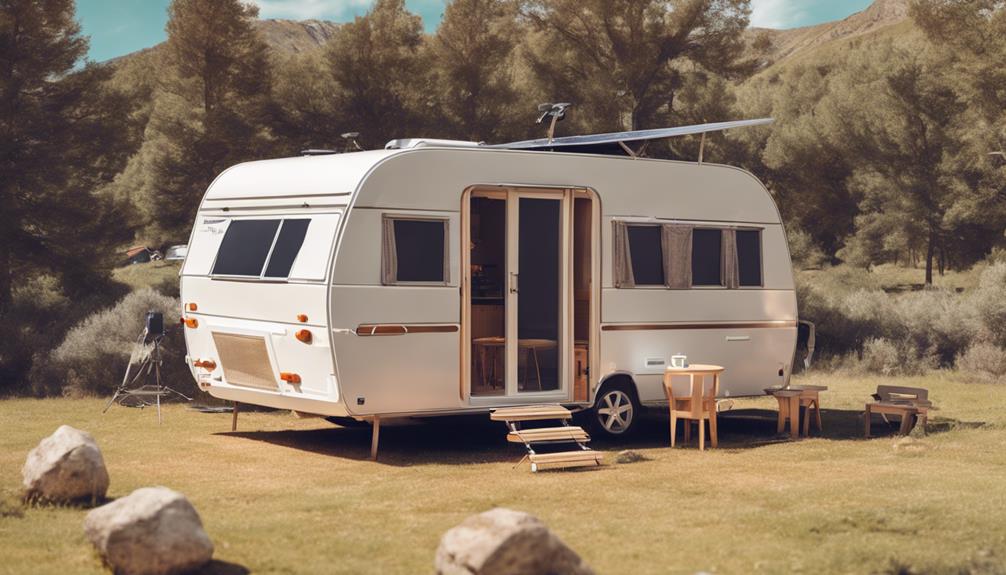
Is solar worth fitting to my caravan?
Short answer: usually yes for keeping a leisure battery topped up, extending time away from electric hook-up and maintaining batteries in storage — but solar is not a direct replacement for mains hook-up. Solar is best treated as part of a system that reduces reliance on EHU, helps weekend and short-term touring, and supports long-term storage maintenance.
How a caravan solar system works
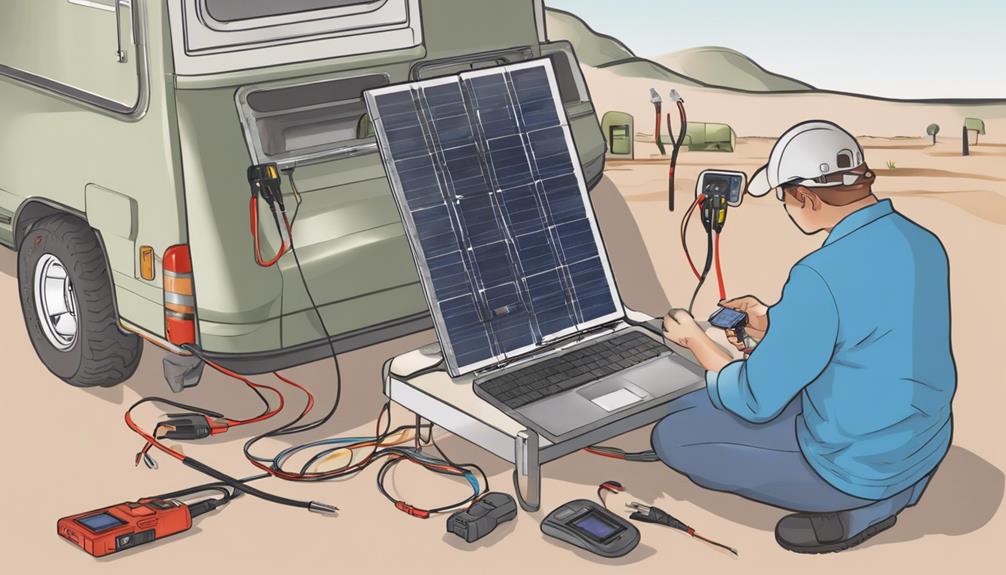
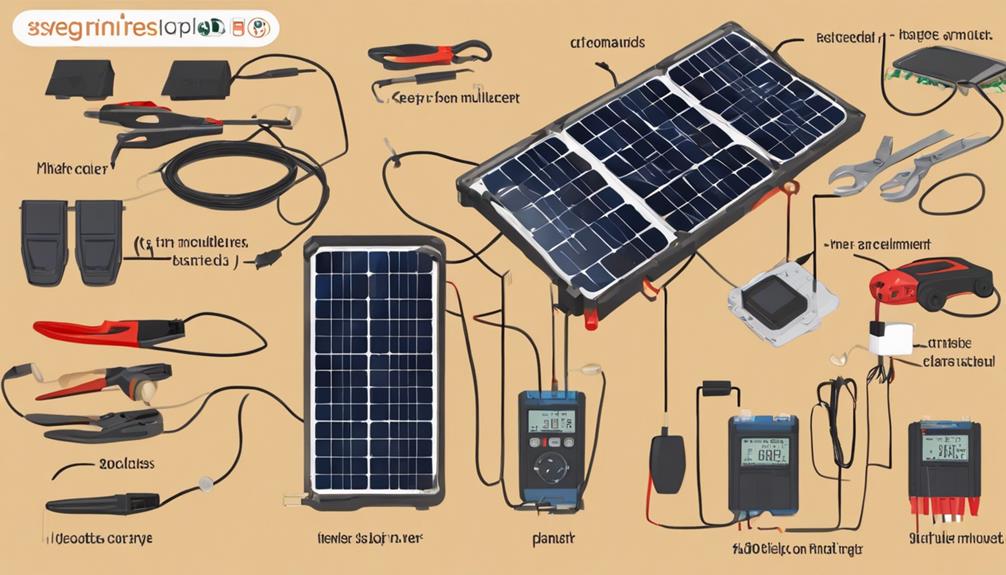
Think of solar as a chain: PV module → solar charge controller (regulator) → leisure battery → 12V loads and/or inverter → 230V appliances. Solar panels produce DC. The battery stores energy and supplies 12V loads directly; an inverter converts DC to 230V for mains-style appliances.
Start with a power audit (do this first)
Estimate daily energy use to size panels and battery. Basic formulas:
- Wh/day = watts × hours used per day
- Ah/day ≈ Wh/day ÷ 12
- Current (A) ≈ W ÷ 12 (for 12V loads; inverter losses make real currents higher)
Illustrative example: lights (20W total) for 5 hours = 100Wh, water pump 40W for 0.5h = 20Wh, phone/laptop charging 50Wh, 12V compressor fridge average ~500Wh/day (highly variable). Total ≈ 670Wh/day → ≈ 56Ah/day at 12V. This is illustrative — fridge consumption depends on model, ambient temperature, ventilation and use.
What size solar panel do you need?
There is no one-size-fits-all. Use the power audit plus seasonal yield estimates (tools such as PVGIS give location and month-by-month outputs). Rule-of-thumb starting bands:
- 40–80W: maintenance of battery in storage, alarms, trackers.
- 100–150W: light summer touring, devices and occasional fridge top-up.
- 150–300W: realistic for regular off-grid touring with moderate loads and a compressor fridge.
- 300W+: for extended off-grid trips when paired with large battery capacity and appropriate controllers/inverters.
Remember: UK winter output can be dramatically lower than summer, horizontal roof-mounted panels are less efficient when the sun is low, and shading, dirt and panel angle matter.
Choosing panel type
Pick the type based on roof space, theft risk, payload and how you camp:
- Rigid roof-mounted – robust, “fit-and-forget”, better cooled (air gap). Risks: roof penetrations, leaks, payload and shading from vents/antennas.
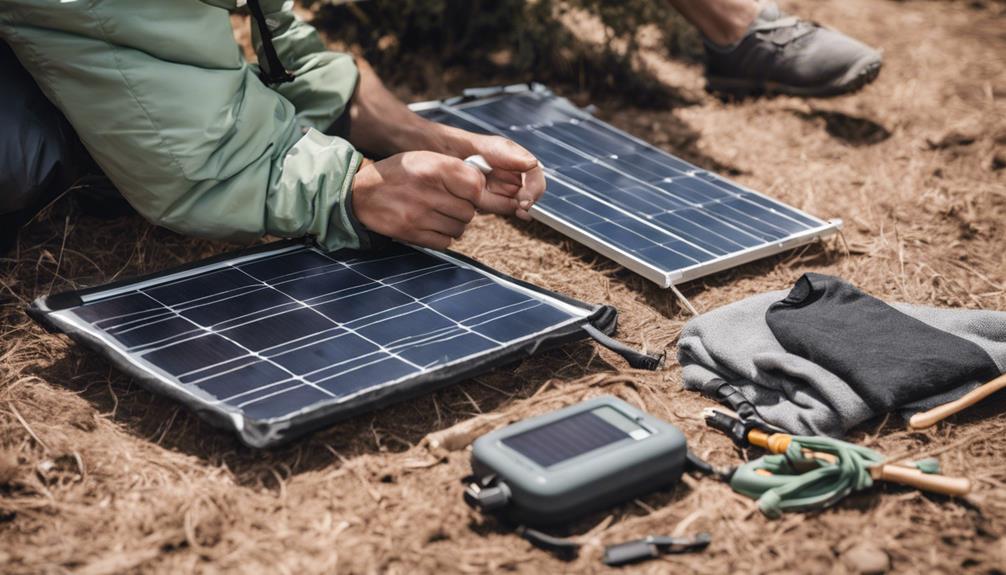
- Portable/folding – can be placed in sun on shaded pitches and tilted for better yield. Downsides: storage, theft risk and trailing cables.
- Flexible/semi-flexible – low profile and light, useful for curved roofs, but installation-sensitive (heat management, correct bonding and airflow are important).
- Cell type – monocrystalline is usually preferred where roof space is limited because of higher efficiency; polycrystalline is legacy/cheaper.
Solar charge controllers: MPPT vs PWM
A controller is essential for any system beyond a tiny maintenance panel. Never connect a typical PV module straight to a battery without appropriate regulation. PWM controllers are cheaper and OK for small, matched-voltage systems. MPPT controllers generally harvest more energy from a panel under variable light/temperature and are often worth the extra cost for touring systems — especially in the UK winter and on larger arrays. Always set the controller to the correct battery chemistry.
Leisure batteries and lithium compatibility
Leisure battery choices affect how you size and manage the solar system. The NCC battery classification (A/B/C) is a useful starting point for expected use. Key points:
- Lead‑acid/AGM/gel: avoid deep discharge to preserve life; usable capacity is less than nominal.
- LiFePO4 (LFP): offers more usable capacity, lower weight and longer cycles but is not always a drop-in swap.
Lithium compatibility checklist (before swapping):
- Will the solar controller support LiFePO4 charging profiles?
- Does the mains charger on the caravan have a compatible profile?
- Does the vehicle alternator/tow charging setup work with lithium?
- Does the battery BMS limit charge/discharge currents — and are cables/fuses sized accordingly?
- Is low-temperature charging protection configured (many LFP batteries require a low‑temp cut-off)?
What solar can and cannot run
Solar charges the battery; the battery powers loads. Expect to run LEDs, pumps, phones, small 12V TVs and modest laptop charging. 12V compressor fridges may be possible but are a large daily draw. High-power 230V appliances such as kettles, heaters, microwaves and kettles are not realistic on small caravan solar systems.
Current example: a 1,000W 230V appliance on a 12V battery draws roughly 83A (1,000 ÷ 12) before inverter losses; with inverter efficiency and wiring losses, currents of 90–100A are plausible — illustrating why heavy-duty cables, fuses and appropriately sized batteries/inverters are required.
Safe installation and standards
Safety matters. Relevant standards to discuss with your installer include BS EN 1648 for 12V installations in leisure vehicles and BS 7671 Section 721 for caravan AC circuits. Practical rules:
- Fit an inline fuse or circuit breaker on the positive cable close to the battery.
- Size cables for continuous current and acceptable voltage drop; avoid undersized wire.
- Use waterproof cable glands, strain relief and route cables away from sharp edges and gas lockers.
- Avoid unnecessary roof penetrations — consider bonding vs bolting and get a qualified fitter for any drilling.
- Get professional help for lithium upgrades, 230V wiring, inverter integration and multi-battery systems; use an Approved Workshop Scheme or qualified leisure-vehicle electrician where appropriate.
Maintenance and everyday use
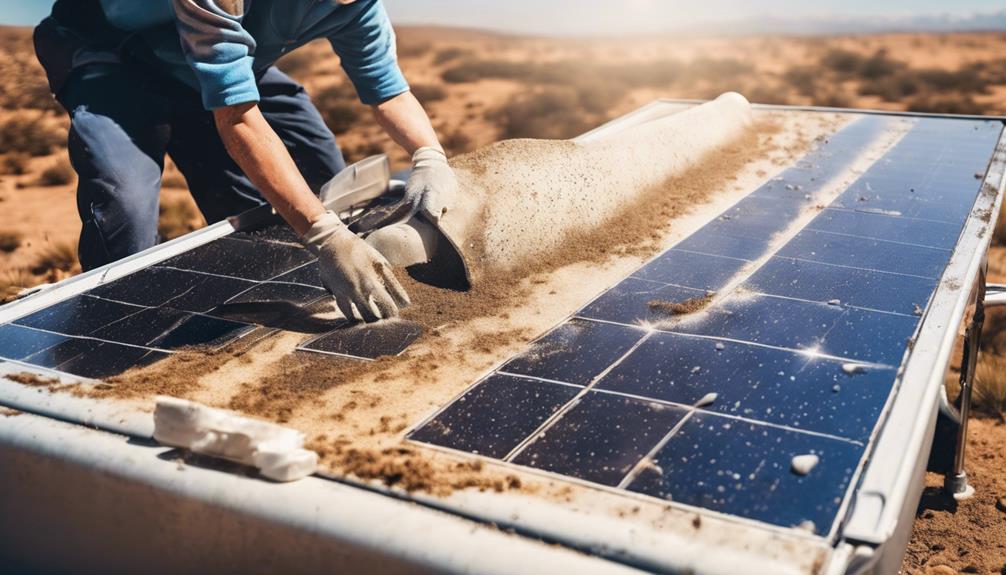
- Keep panels clean and clear of debris.
- Check seals, mounts and cable terminations periodically.
- Monitor battery state of charge and recheck charger/controller settings after any battery change.
- For winter/storage, a small maintenance panel or a regular top-up is useful; remember output is limited in winter.
Quick FAQs
Is 100W enough? It can be for light summer use and trickle-charging a decent battery, but it won’t reliably support high fridge use or extended off-grid stays — season and load matter.
Can I connect a panel directly to the battery? Generally no — use a charge controller to prevent overcharging and to match the battery chemistry.
Should I fit MPPT? For most touring systems and larger panels, MPPT is worthwhile; for tiny maintenance panels PWM may be acceptable.
Conclusion
Caravan solar is a practical way to increase independence from EHU, preserve battery life in storage and support off-grid stays — provided you size the system from a realistic power audit, choose appropriate panel types and controllers, and install it safely to standards. When in doubt about roof penetrations, lithium upgrades or 230V work, involve a qualified leisure-vehicle electrician or Approved Workshop Scheme fitter.