Homeowners considering energy independence often ask: how do solar powered batteries work? Understanding the flow of electricity from sunlight to usable household power makes it easier to decide whether a battery is a good addition to a rooftop solar system. This article explains the basics of solar battery operation, the main components involved, the different chemistries available, and realistic use cases for home solar battery storage so you can make an informed decision.
What are solar powered batteries?
Solar powered batteries are rechargeable battery systems designed to store electricity generated by solar panels. Unlike conventional batteries that are intended for intermittent use, these batteries are optimized for daily cycling, efficiency, and long-term performance in residential environments. They allow homeowners to capture excess solar energy produced during the day and use it at night, during cloudy periods, or when utility rates are higher. This capability is central to how does solar battery storage work for practical household energy management.
How do solar batteries work? — charging and power flow
At the heart of a solar-plus-storage system is the conversion and routing of electricity. Solar panels produce direct current (DC) electricity when exposed to sunlight. That power is either converted to alternating current (AC) by a solar inverter for immediate household use or routed to a battery for storage. When storing energy, the battery management system (BMS) controls the charging process to protect the battery and optimize life. Later, when you need the energy, the battery outputs DC, which an inverter converts to AC for appliances and home circuits. This sequence explains in practical terms how does a solar battery work within a home energy system.
When and why batteries are charged
Batteries charged by solar panels typically store surplus generation that would otherwise be exported to the grid. They can also be charged from the grid during off-peak times if a homeowner wants to take advantage of lower electricity rates. The charging strategy is governed by either a smart energy management system or preset rules, allowing the battery to prioritize backup capacity, bill savings, or maximizing self-consumption of solar energy.
Battery chemistries and performance considerations
Not all solar batteries are created equal. Lithium-ion batteries, particularly lithium iron phosphate (LiFePO4), are currently dominant in residential systems due to their high energy density, relatively long cycle life, and favorable safety profile. Lead-acid batteries are less common now but may still be used in budget-conscious or off-grid setups. Flow batteries and emerging chemistries offer long cycle lives and deep discharge capabilities but are less common for typical home installations. When evaluating options, focus on usable capacity, depth of discharge, round-trip efficiency, cycle life, and warranty terms to understand real-world performance.
Key specs to compare
Usable capacity tells you how much of the battery’s total energy is safe to use; depth of discharge indicates how deeply the battery can be cycled without significant degradation; round-trip efficiency shows energy losses between charging and discharging; and cycle life estimates how many charge-discharge cycles the battery will perform before reaching end of life. These factors directly influence how effectively the battery will support goals like reducing peak utility bills or providing backup power.
Typical home solar battery storage setups and components
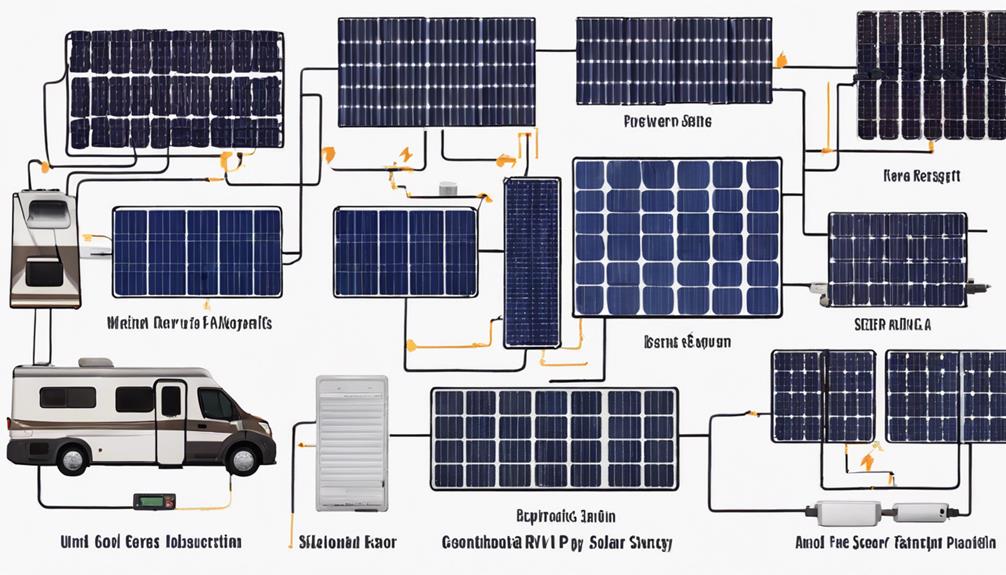
A standard home solar battery system includes solar panels, an inverter or hybrid inverter, the battery itself, a battery management system, and sometimes an energy gateway or smart meter. In a grid-tied configuration, the inverter coordinates power flow between solar generation, the battery, the home, and the grid. Hybrid inverters simplify the design by handling both panel-to-grid conversion and battery charging in a single unit. For owners wondering how do solar batteries work during outages, many systems include backup-ready inverters and automatic transfer switches that isolate the home from the grid and supply critical circuits from the battery.
Practical use cases and tips for homeowners
Solar battery storage supports several homeowner goals: reducing electricity bills by shifting solar energy to times of higher rates, increasing self-consumption to lower exports to the grid, and providing backup power during outages. For example, families who use most of their electricity in the evening can store daytime solar for later use, cutting grid purchases. In areas with time-of-use pricing, batteries can charge during low-cost periods and discharge during peak pricing to maximize savings. For those prioritizing resilience, configuring a battery to keep essential loads running during an outage provides peace of mind and continuity.
When planning, size the battery according to daily usage patterns and outage needs rather than panel capacity alone. A small battery may reduce bills modestly but provide little backup. Conversely, a larger battery increases stored energy but adds cost. Integrating smart energy controls and monitoring helps optimize how does solar battery storage work for your household by adjusting charge and discharge behavior based on weather forecasts, tariff schedules, and user preferences.
Maintaining a residential solar battery system involves periodic software updates, monitoring system health via the manufacturer’s app, and ensuring proper ventilation and temperature control around the battery. Many modern systems include remote diagnostics and warranties that cover performance over a defined number of years or throughput amount.
Understanding how do solar powered batteries work helps homeowners weigh the benefits of adding storage to a rooftop system. By capturing excess generation for later use, batteries increase energy independence, improve resilience, and can lower electricity costs when paired with the right usage strategy. Whether your priority is emergency backup, bill savings, or maximizing self-consumption, a well-designed home solar battery storage system can be tailored to meet those goals.