Intro — who this helps
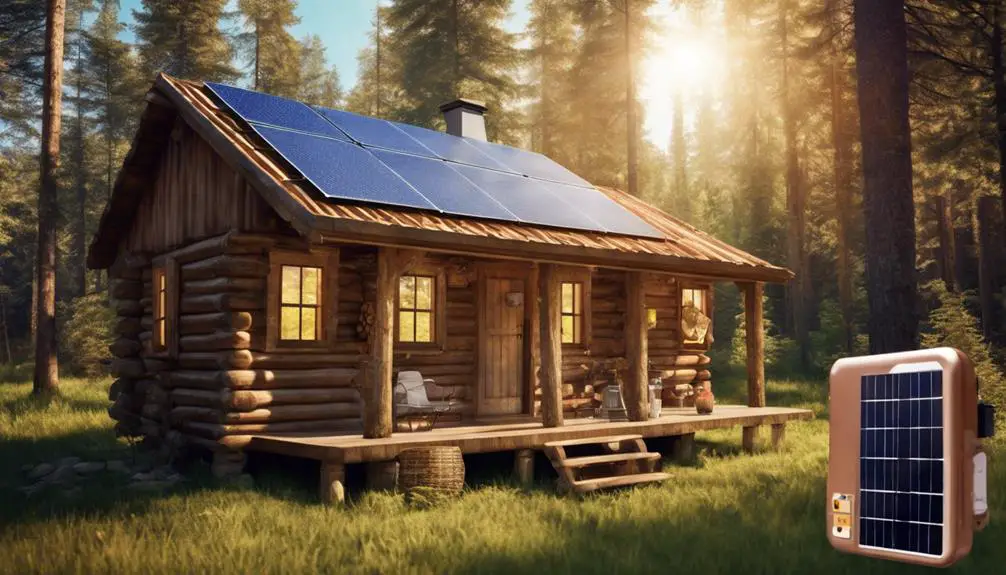
This guide helps weekenders and full‑time cabin owners decide whether and how to install solar PV + storage. It covers load estimating, site assessment, array and battery sizing, component selection, permitting basics, and maintenance. Use it to create a first‑pass system plan and then run location‑specific production estimates (for example with PVWatts) and consult a licensed installer.
Quick decision checklist
- Stay grid‑tied or go off‑grid? (Grid access simplifies backup and sizing.)
- Full‑time or weekend? (Full‑time usually needs 3–4× the energy of a minimalist weekend cabin.)
- Desired autonomy: days of battery backup during low sun?
- Budget and space for panels/batteries on roof or ground rack?
- Plan for winter/low‑sun months or add generator backup?
Step 1 — Measure and prioritize loads (kWh/day)
Start with an energy budget: list appliances, wattage, and hours of use to get kWh/day. Typical ranges for cabins:
- Very minimal weekend: ~1–5 kWh/day
- Modest full‑time: ~5–15 kWh/day
Estimate conservatively and prioritize: LED lighting, refrigeration, water pumps, small heating loads, phone/laptop charging. Accurate kWh/day drives array and battery size—measure with a clamp meter or smart plug where possible.
Step 2 — Site assessment and production estimate
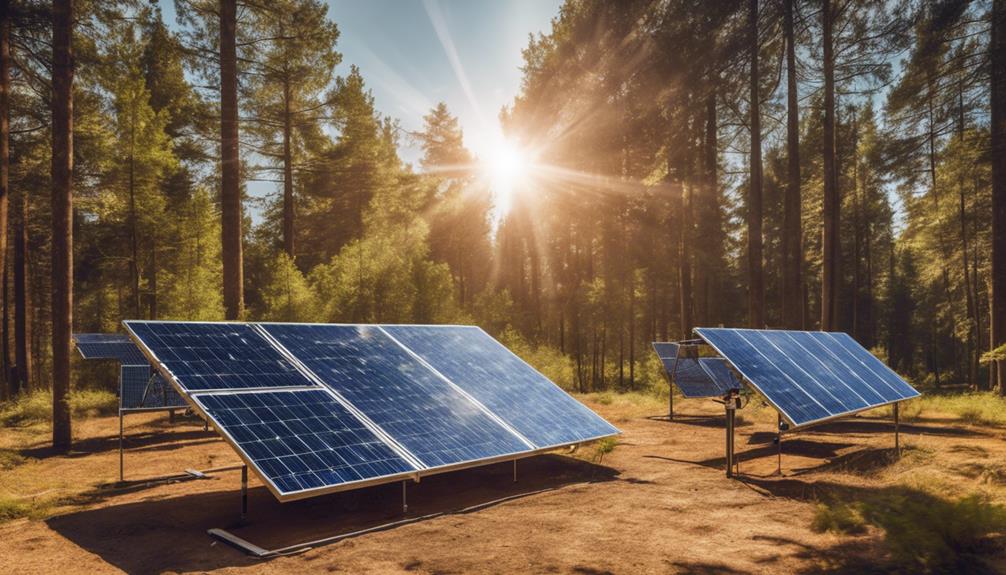
Assess shading, roof pitch, azimuth, and available rack area. In the Northern Hemisphere, orient generally toward true‑south and set tilt near site latitude, but roof constraints and seasonal goals can change the optimum—run PVWatts or another site simulator for location‑specific Peak sun hours (PSH) and production. PSH is the site’s equivalent full‑sun hours per day used in production estimates. (Estimate — run PVWatts for your location.)
Step 3 — Array sizing (formula + example)
Use a simple sizing equation:
required array (kW) ≈ daily kWh ÷ PSH ÷ system efficiency factor
Use a system efficiency factor of 0.7–0.9 (accounts for wiring, temperature, inverter/battery losses).
Worked example: 5 kWh/day, PSH = 4, efficiency = 0.75 → 5 ÷ 4 ÷ 0.75 ≈ 1.67 kW (≈ 1.7 kW → ~5 × 340 W panels). (Estimate — run PVWatts for your location.)
Step 4 — Battery selection and sizing
Decide chemistry first. LFP / LiFePO4 batteries are the preferred choice today for cabin storage: longer cycle life, deeper Depth of Discharge (DoD), better safety profile and lower lifecycle cost compared with lead‑acid. If you consider lead‑acid, note heavier weight, regular maintenance, and shorter life.
Battery sizing formula (usable capacity):
usable capacity = daily kWh × days of autonomy ÷ (DoD × round‑trip efficiency)
Example: 5 kWh/day × 2 days ÷ (0.9 DoD × 0.9 round‑trip) ≈ 12.3 kWh usable → choose ~13–14 kWh nominal LFP bank. Match the battery system’s BMS, voltage, and inverter compatibility when selecting nominal capacity.
Follow transport, installation, and disposal rules for batteries and follow manufacturer recommendations for ventilation and fire protection. Include a battery management system (BMS) and proper enclosures.
Step 5 — Charge controllers, inverters, and BOS
MPPT (maximum power point tracking) charge controllers are recommended for off‑grid and variable conditions because they harvest more energy than PWM controllers. Choose system voltage (12/24/48V) based on power level—48V reduces currents for larger systems.
Select an inverter or hybrid inverter sized for continuous load and surge (motor start) capacity. Hybrid inverters can manage grid connection, battery charging, and islanding if you want a grid‑tied system with backup. Balance of system (BOS) includes racking, wiring, disconnects, grounding, monitoring, and safety devices—budget ~20–40% of component costs for BOS and installation in DIY estimates.
Step 6 — Backup, permits, and when to consult a pro
Design for the worst month (winter) or accept a backup generator. Don’t assume “no generator” unless you’ve sized for extended low‑sun periods. Obtain local permits and follow electrical code; consult a licensed electrician for grid connections, grounding, and final commissioning—this reduces safety and inspection issues.
Installation & commissioning checklist
- Confirm array layout, tilt, and mounting hardware rated for local wind/snow loads.
- Verify wiring sizes, DC/AC disconnects, surge protection, and grounding.
- Commission batteries with correct charging profiles and BMS settings.
- Test inverter startup, islanding, and transfer behavior if grid‑tied/hybrid.
- Enable remote monitoring where possible and log production for 30–90 days.
Maintenance & winter prep
Inspect panels, seals, wiring, and battery terminals annually. Clean panels when soiled—frequency depends on site. Monitor battery state of charge and cell voltages; maintain firmware and monitoring alerts. For snowy climates, consider steeper tilt or manual snow removal strategies and size conservatively for reduced winter PSH.
Typical system examples (ballpark)
- Weekend cabin (basic lights, fridge, charging): 1–2 kW array, 2–6 kWh usable battery.
- Modest full‑time cabin (refrigeration, pump, lights, limited heating): 2–4 kW array, 10–15 kWh LFP bank.
- Full‑feature off‑grid (electric heat, larger loads): 4–8+ kW array, 20+ kWh battery and generator backup.
Costs vary widely by region and equipment—run PVWatts and get installer quotes for site‑specific numbers.
Resources & next steps
Run PVWatts for location‑specific PSH and production estimates and use an appliance worksheet to calculate kWh/day. Then consult a licensed electrician or installer for permitting and final system design.
This guide is informational only. Electrical work, battery installation, and permitting should be performed by licensed professionals. Estimates are site‑specific — run PVWatts or equivalent for your location before final design.